Key facts
- Length
- Half a day on foot, with a rest
- Start
- Nowhatta and the Jamia Masjid
- Stops
- Shah-e-Hamdan, Zaina Kadal bridge, Maharaj Gunj bazaar
- Finish
- The Mughal gardens, by car
- Best time
- Morning, outside Friday prayer time
- Dress
- Modest, with shoes that are easy to remove
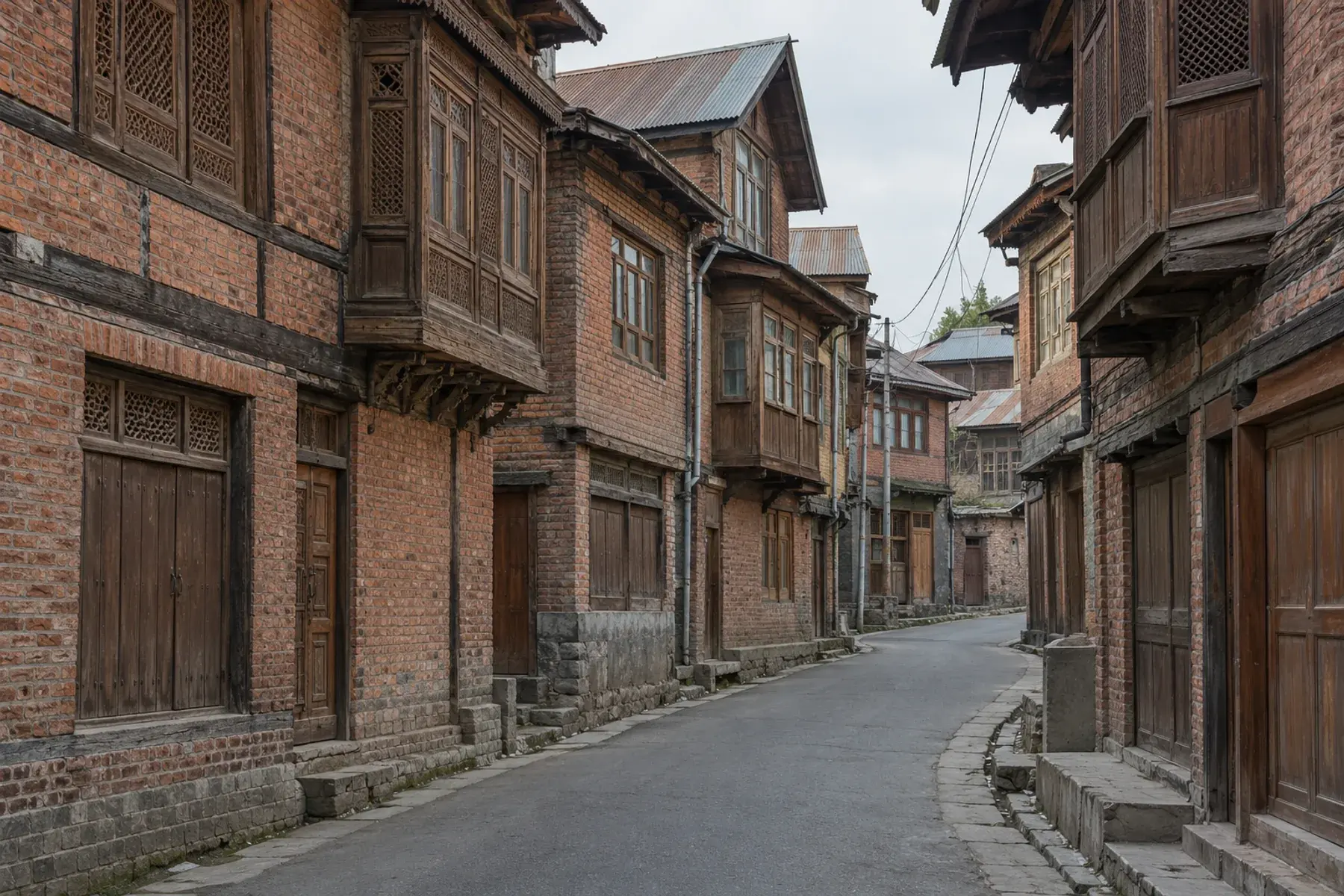
Old Srinagar is a living museum. Its narrow lanes, wooden mosques, bustling bazaars, and Mughal gardens hold five centuries of history. This self-guided heritage walk takes you through the soul of the city.
Start: Nowhatta & Jamia Masjid (1 hour)
Begin at Nowhatta, the heart of old Srinagar. The Jamia Masjid, built in 1400 by Sultan Sikandar, is a magnificent example of Indo-Saracenic architecture with its 378 wooden pillars. The vast courtyard can hold 33,000 worshippers. Walk through the surrounding bazaar where spice sellers, coppersmiths, and Pashmina merchants have traded for generations.
Step 2: Shah-e-Hamdan Shrine (30 mins)
A 15-minute walk east brings you to the Khanqah of Shah-e-Hamdan, one of Kashmir’s most revered shrines. Built in 1732, it is covered entirely in papier-mâché work. Non-Muslims may not enter the inner sanctum, but the exterior and river-facing facade are worth the walk.
Step 3: Zaina Kadal Bridge (15 mins)
Cross the Zaina Kadal, a seven-arched stone bridge built in 1424 by Sultan Zain-ul-Abidin. It is one of the oldest bridges in Srinagar and offers a beautiful view of the Jhelum River with the old city rising on both banks.
Step 4: Maharaj Gunj Bazaar (1 hour)
Meander through Maharaj Gunj, the city’s busiest traditional market. This is where locals shop for everything from dried fruits and spices to copperware and textiles. Try the street food — particularly the seekh kebabs and the famous Kashmiri noon chai with samosa.
Step 5: Mughal Gardens (Allow 2 hours)
Conclude at the Mughal Gardens. Start with Shalimar Bagh, built by Emperor Jahangir for his wife Nur Jahan in 1619. Next is Nishat Bagh, the largest Mughal garden in Kashmir, with 12 terraces representing the 12 zodiac signs. End at the beautiful Chashme Shahi, a spring-fed garden built around a freshwater spring.
Practical Tips
Start early (around 8 AM) to avoid crowds. Wear comfortable walking shoes. Carry water and sunscreen. Allow a full day for the complete walk. Hire a local guide through TDI Holiday Ventures for deeper historical insights and access to hidden corners most tourists miss.
Before you set out
Old Srinagar is a living neighbourhood, not a museum, and the lanes are narrow, crowded and full of ordinary life. That is its charm and the reason to go with respect and a little preparation. Dress modestly, with covered shoulders and legs; carry water and small change; and keep your bag in front of you in the crowds. Check locally the day before: access to the area around the main mosque can change for prayers, festivals and security reasons, and a guide or your hotel will know the situation.
Nowhatta and the Jamia Masjid
Begin at Nowhatta, the busy heart of the old city, and the great wooden mosque nearby. The building is a landmark of Kashmiri wooden architecture, with tall pillars of timber and a large inner courtyard. Visit in the morning, avoid Friday prayers, remove your shoes at the entrance and cover your head if asked. Be quiet and ask before photographing people.
The shrine of Shah-e-Hamdan
A short walk brings you to the riverside shrine of Shah-e-Hamdan, one of the most venerated in Kashmir, known for its papier-mâché and painted woodwork. Rules for entering vary, and in some parts access is reserved for worshippers, so follow the signs and the advice of the attendants. Even from outside, the carved eaves and the view of the Jhelum are worth the stop.
Zaina Kadal and the river
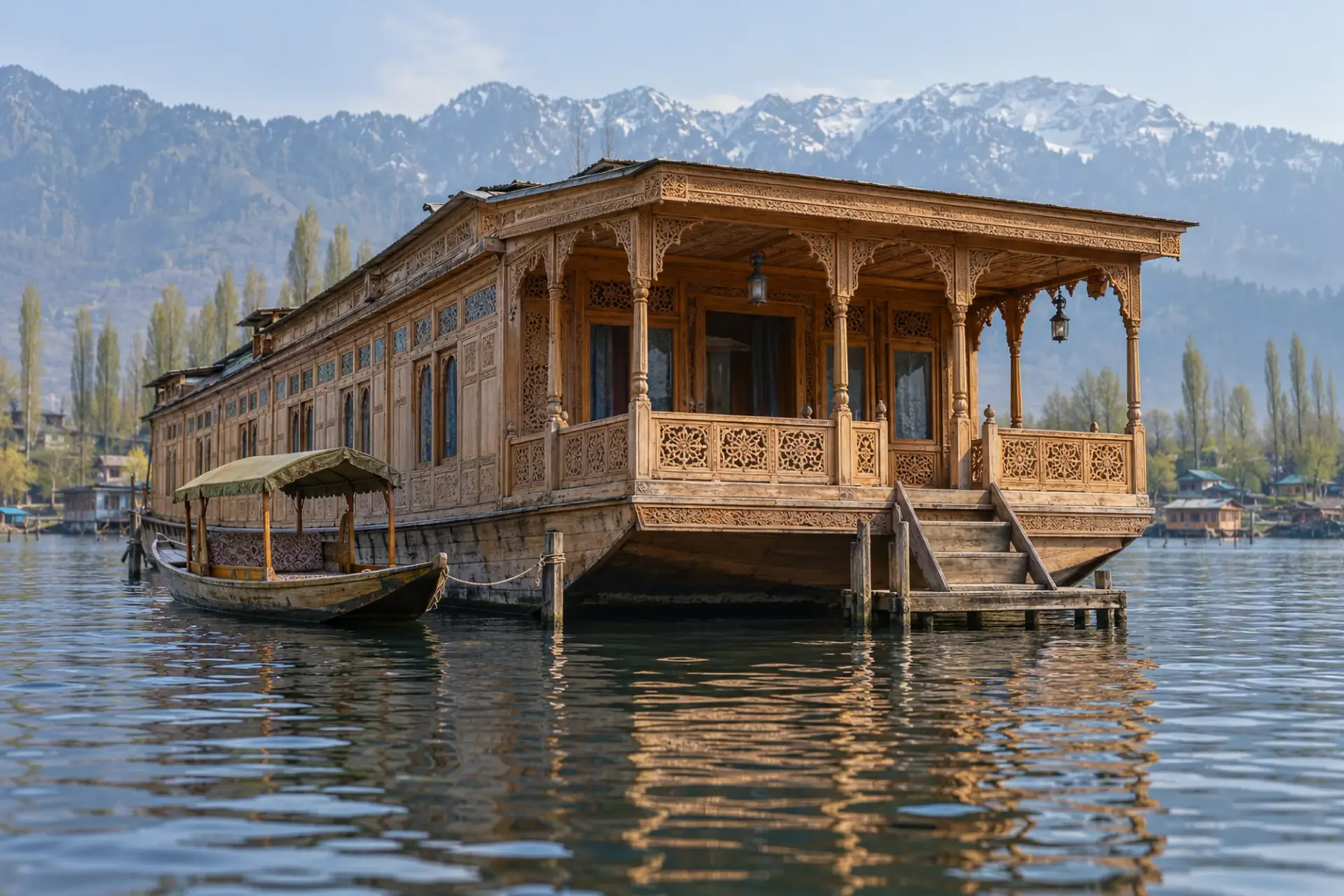
The old wooden bridges of the Jhelum are among the sights of the city, and Zaina Kadal is one of the best known. Walk across, stop in the middle for the view of the old houses leaning over the water and watch the river traffic below. Mind the scooters and carts.
Maharaj Gunj bazaar
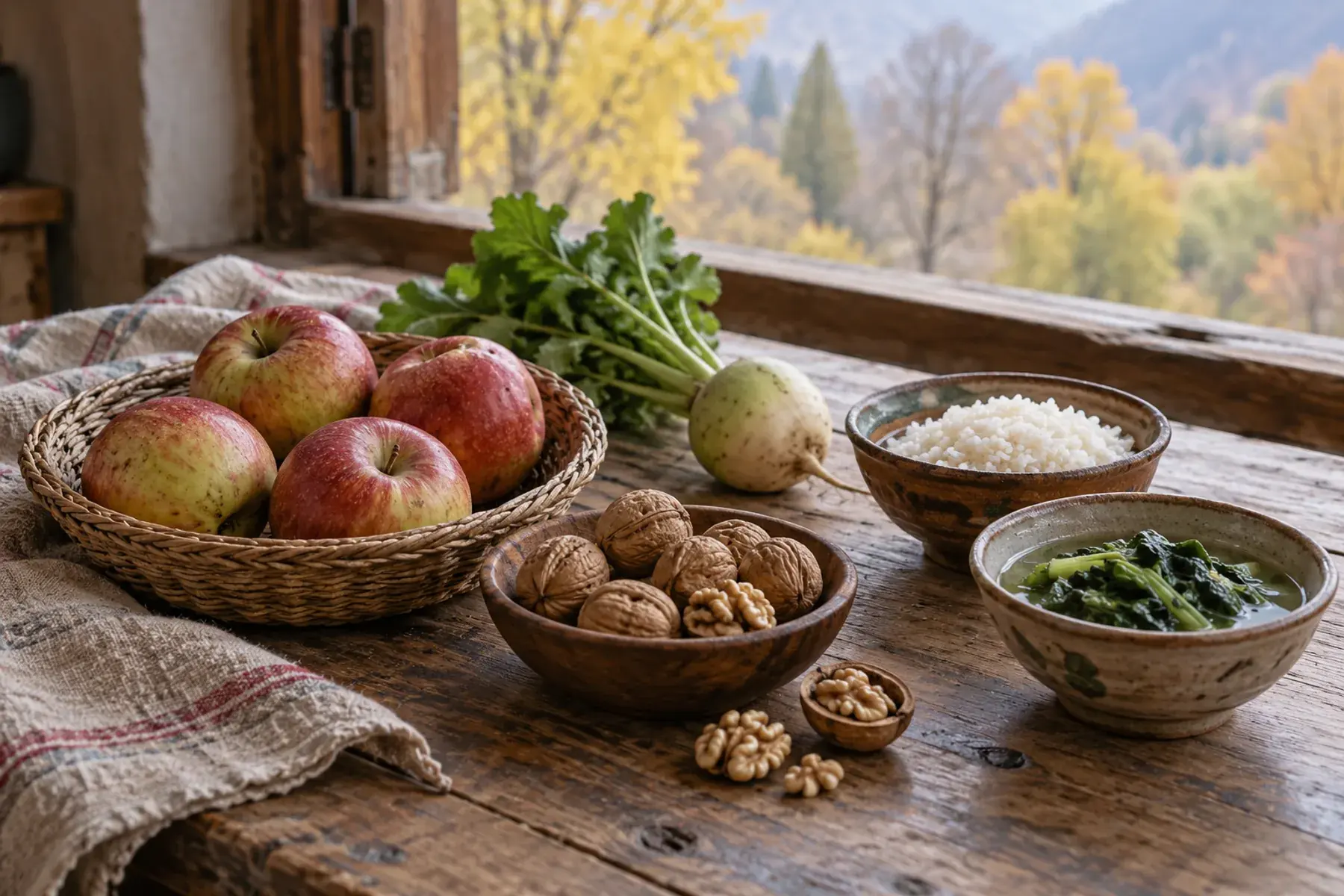
Maharaj Gunj is the city's traditional market, a place of spices, dry fruit, copperware, textiles and stalls of local snacks. Try small portions, buy from stalls with a crowd and keep your hands clean. Bargain politely and take your time; buying a few dry fruits, a pashmina scarf or a kahwa set is a fine way to take a piece of the city home. Our handicrafts guide explains what is worth buying.
Finish at the gardens
After the lanes, the gardens are a pleasure: terraces, chinar trees and water. Take a cab from the old city to Nishat and Shalimar, and read our guide to Srinagar's Mughal gardens to plan the visit and the light.
Eating along the way
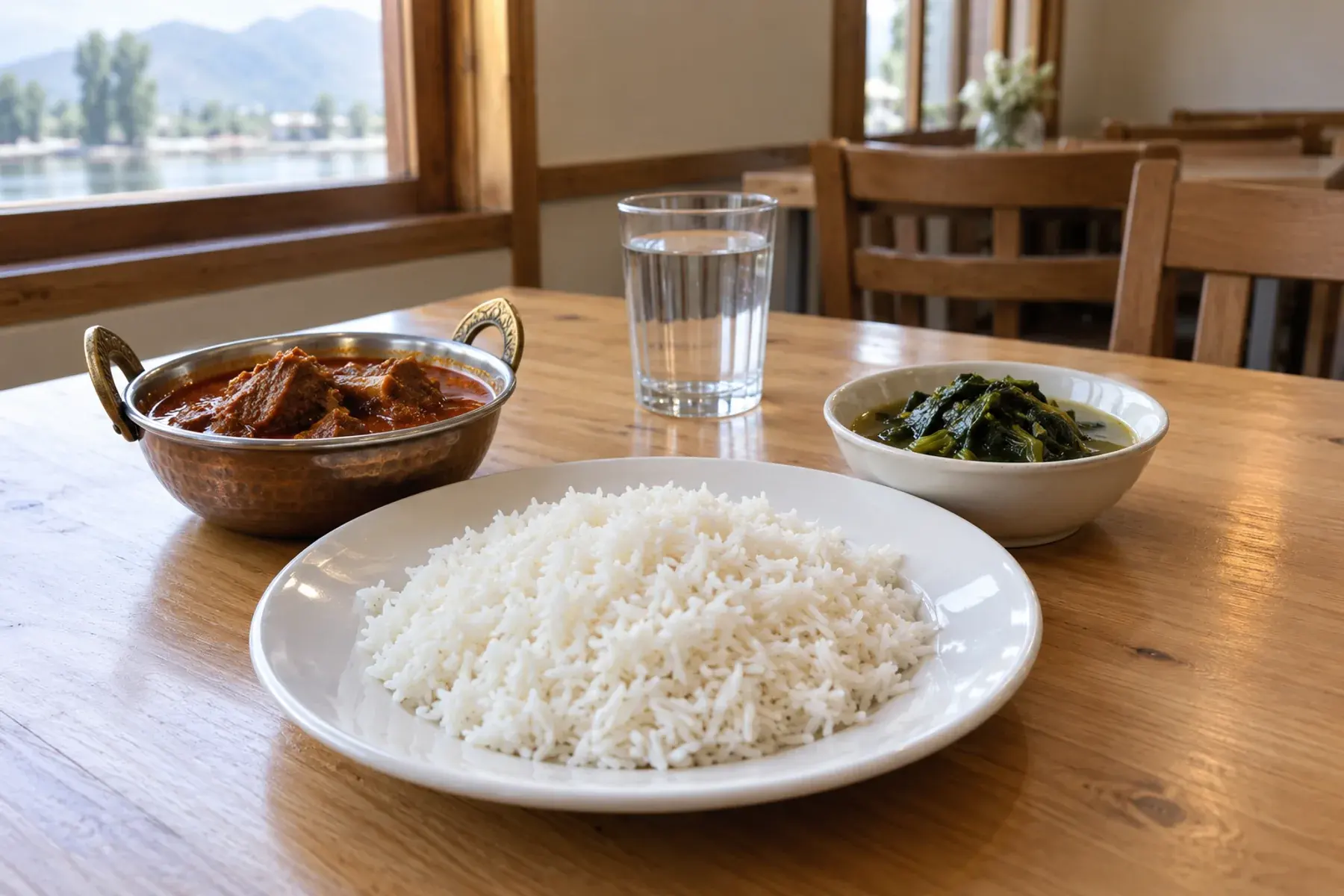
- Kahwa, the saffron and almond tea, and fresh bread at a bakery stall.
- A plate of kebabs or a small portion of a traditional dish in a busy local eatery.
- In winter, ask about the seasonal breakfast dishes that locals queue for.
A suggested half day
- 8:30: leave your hotel and reach Nowhatta.
- 9:00: the great mosque and the shrine.
- 10:30: Zaina Kadal and the river, then the market.
- 12:30: lunch in the old city.
- 14:00: a cab to the gardens and an easy evening.
A little history, lightly held
The old city grew along the Jhelum over many centuries, and its lanes, wooden shrines and bridges reflect the mixed history of Kashmir: Persian and Central Asian influence in the crafts, Buddhist and Hindu pasts in the region's earlier layers, and a long Islamic tradition in the buildings you will see. Guides will give you dates and stories, and they differ on details; treat the numbers you hear as the way a place is remembered rather than a record. What the walk shows plainly is craftsmanship, wood and paper and water.
Taking photographs with care
The lanes are photogenic, and people are usually happy to be asked. Ask before photographing faces, a shop front or anyone at prayer, do not use flash inside shrines and put the camera away when asked. A small purchase, a few words and a smile open more doors than a long lens. Avoid drones: they are restricted in the old city and near the gardens.
With a guide
A local guide brings the lanes to life and handles access and etiquette. We can arrange one with a vehicle, as part of a Srinagar day, and tell you what is open. See our Srinagar destination guide for the rest of the city.
Questions travellers ask
How long does the old Srinagar walk take?
About half a day, including stops, tea and a short rest. Start in the morning and avoid Friday prayer time.
What should I wear?
Modest clothing, with shoulders and legs covered, and shoes that are easy to take off. Carry a scarf for covering your head if asked.
Is it safe for tourists?
The area is lived in and busy, and most visitors walk it without problems. Check locally the day before for access and security, keep valuables close and follow local advice.
Can I go inside the shrine?
Rules differ for each building and day, and some parts are reserved for worshippers. Follow the signs and the advice of the attendants.
Is a guide worth it?
Yes for first visits: a guide handles etiquette and access and tells the stories behind the buildings. We can arrange one as part of a Srinagar day.
Written by the TDI Holiday Ventures planning desk in Srinagar. Conditions, fares and rules change: confirm anything that affects your booking with us on WhatsApp before you pay.