Key facts
- What
- A ceremonial multi-dish feast of Kashmiri cooking
- Served
- On a shared platter for four, with rice at the centre
- Cooks
- Specialist chefs called wazas
- Key dishes
- Rogan josh, yakhni, gushtaba, rista and tabak maaz
- Ends with
- Kahwa and sweet dishes
- Vegetarians
- Restaurant versions exist; ask in advance
Wazwan is not a meal. It is a ritual — a multi-course feast rooted in Persian and Central Asian tradition, refined over centuries in the kitchens of Kashmiri Wazas (master chefs), and served at every wedding, celebration and important gathering in the valley. For a first-time guest, understanding its structure makes the experience far richer.
The Ritual Before the Meal
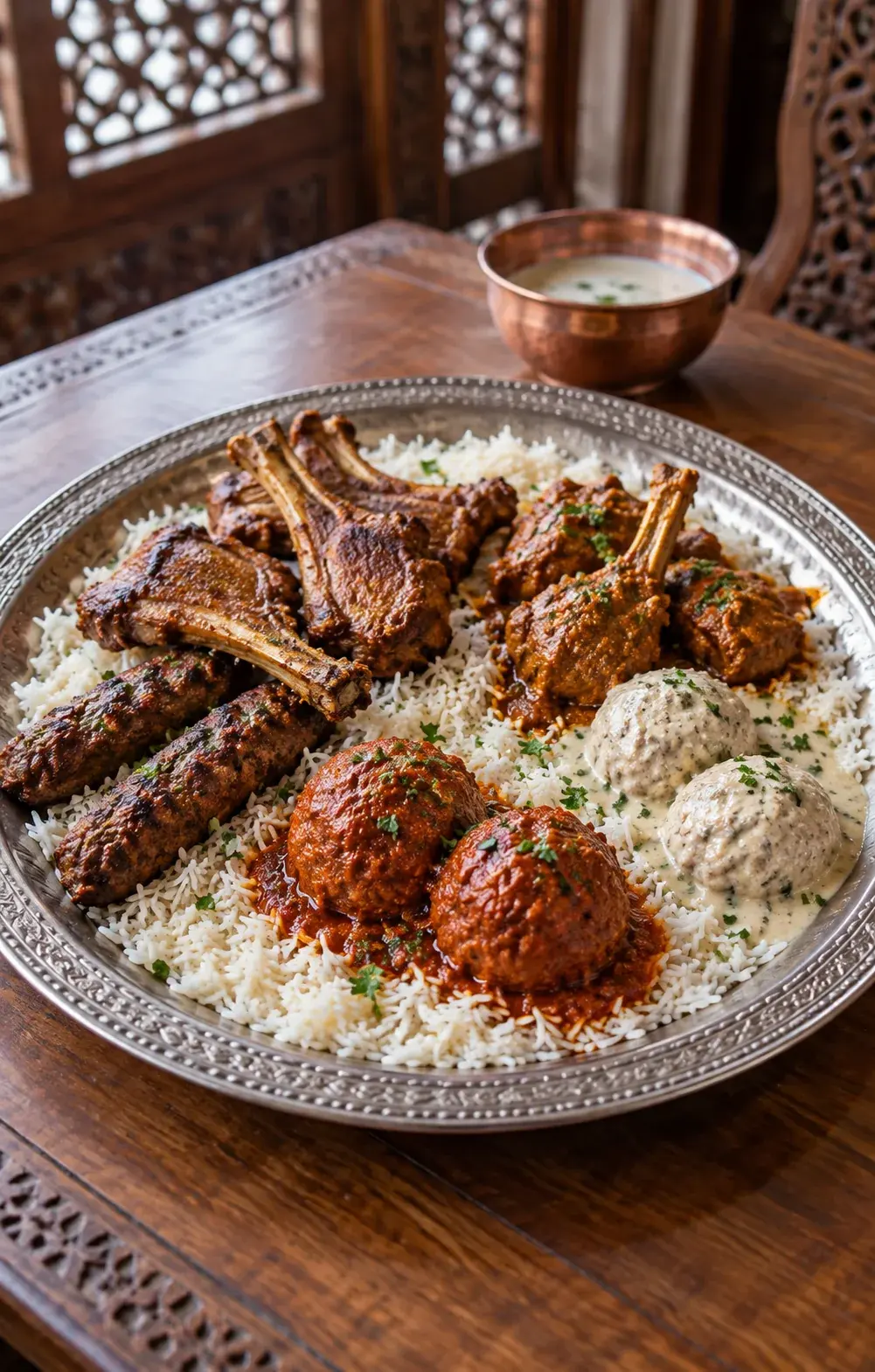
Wazwan begins before a single dish arrives. Guests sit four to a large copper platter called a trami, and a designated host pours warm water over each guest's hands from a tash-t-nari — a traditional basin and ewer — as a gesture of hospitality. Only after this hand-washing ritual does the meal begin.
The Signature Dishes
A full wazwan can run to 36 courses, though modern versions typically serve 15–20. The essentials to know: Rogan Josh, lamb simmered in a rich, Kashmiri-red gravy coloured by cockscomb flower rather than chilli; Gushtaba, hand-pounded meatballs cooked in a delicate yoghurt gravy and traditionally served last, as the meal's closing course; Tabak Maaz, lamb ribs first simmered, then fried to a deep crisp — often the dish guests remember most; Rista, pounded meatballs in the same fiery red gravy as Rogan Josh; and Yakhni, a milder, yoghurt-based mutton curry flavoured with fennel and dry ginger. Each dish is meant to be eaten with plain rice, never bread, and shared communally straight from the trami.
Vegetarian Wazwan
Kashmiri Pandit households developed an equally elaborate vegetarian tradition, built around dishes like Dum Aloo (baby potatoes in a fiery yoghurt gravy) and Paneer Chaman. Most Srinagar caterers can arrange a full vegetarian wazwan on request — just ask your host or tour operator in advance.
Where to Experience It
The most authentic wazwan is eaten in a Kashmiri home during a wedding season (roughly September to March), but few travellers have that access. The next best option is a private wazwan dinner arranged through a local operator, cooked by a family Waza rather than a restaurant kitchen — the difference in flavour is noticeable. Ahdoos and Mughal Darbar in Srinagar are reliable restaurant options for a smaller-scale tasting if a private booking isn't possible.
Etiquette Worth Knowing
Wait for the host to begin before eating. Use your right hand only. It's polite to sample every dish placed on the trami, even briefly, and finishing your rice is considered a compliment to the host. And save room — the meal is designed to be paced across two to three hours, not rushed.
Our Recommendation
If a wazwan dinner isn't already part of your itinerary, ask us to add one. A candlelit private wazwan on a houseboat deck, arranged with 48 hours' notice, is consistently one of the most-remembered evenings our guests have in Kashmir.
What the wazwan is
Wazwan is both a meal and an event. It is the feast served at weddings, festivals and special occasions, prepared over a day or more by a team led by a master cook, the waza, whose craft is passed from family to family. The dishes are slow-cooked, aromatic and rich, and the meal follows a fixed order. For visitors, it is the most direct taste of the valley's food culture, and a rare chance to eat what locals eat when they celebrate.
How it is served
Guests sit on the floor in groups of four and share a large copper platter, the traamis, with a mound of rice in the centre and dishes arranged around it. Hand-washing at the start is a ritual, with a jug and a basin passed around. Dishes arrive in a sequence, and the host makes sure everyone has more than enough. At a restaurant, the experience is a version of this, often at a table. Eat slowly, as the meal is long.
The dishes to know
- Rogan josh: lamb in a deep red gravy coloured by Kashmiri chillies and flavoured with fennel and ginger.
- Yakhni: lamb in a mild yoghurt gravy with cardamom and fennel.
- Gushtaba: soft, pounded meatballs in a yoghurt gravy, often the final dish.
- Rista: spiced meatballs in a red gravy.
- Tabak maaz: fried lamb ribs, crisp outside and tender inside.
- Methi maaz: lamb cooked with fenugreek.
- Daniwal korma and other regional specialities, depending on the cook.
Rice, bread and sides
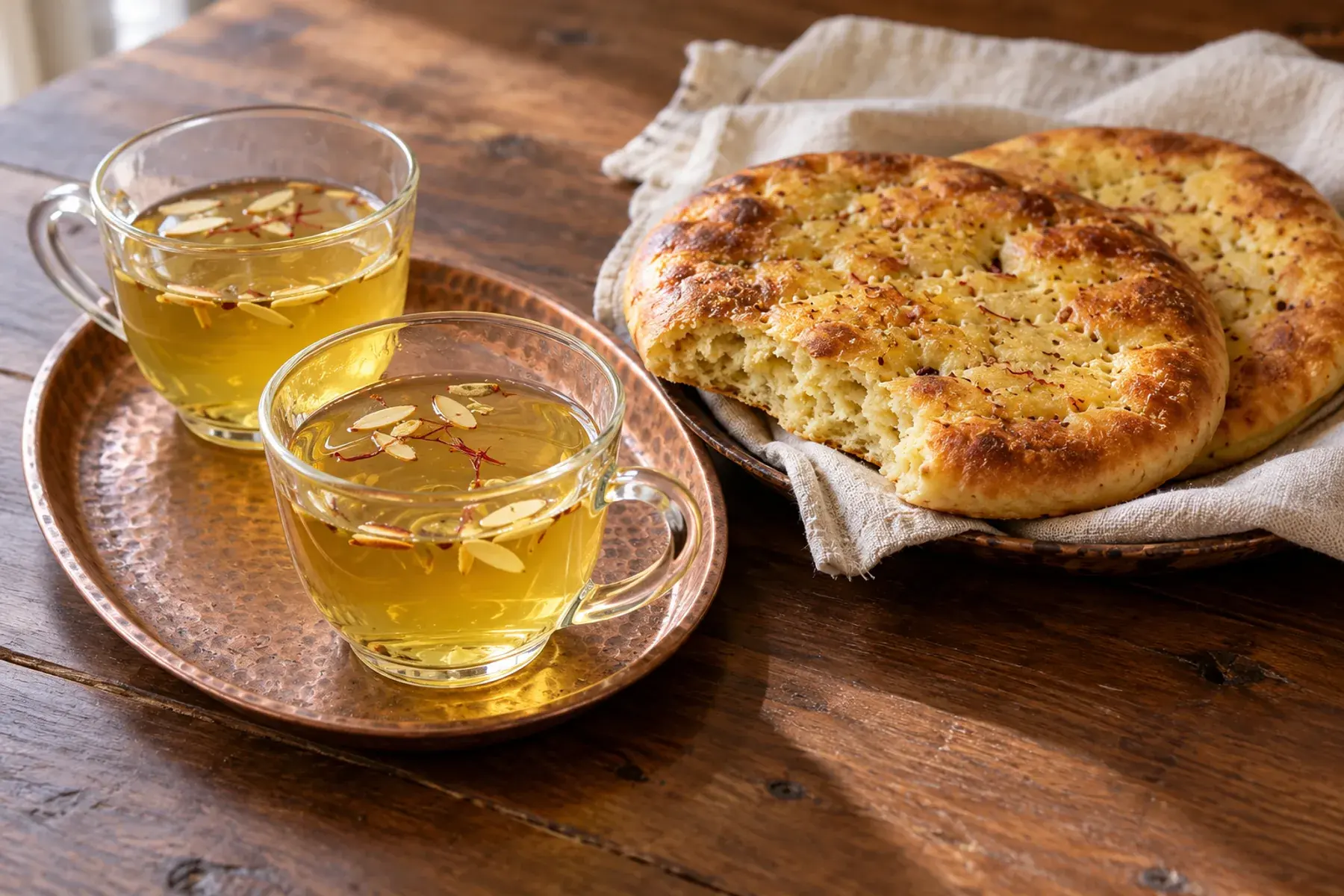
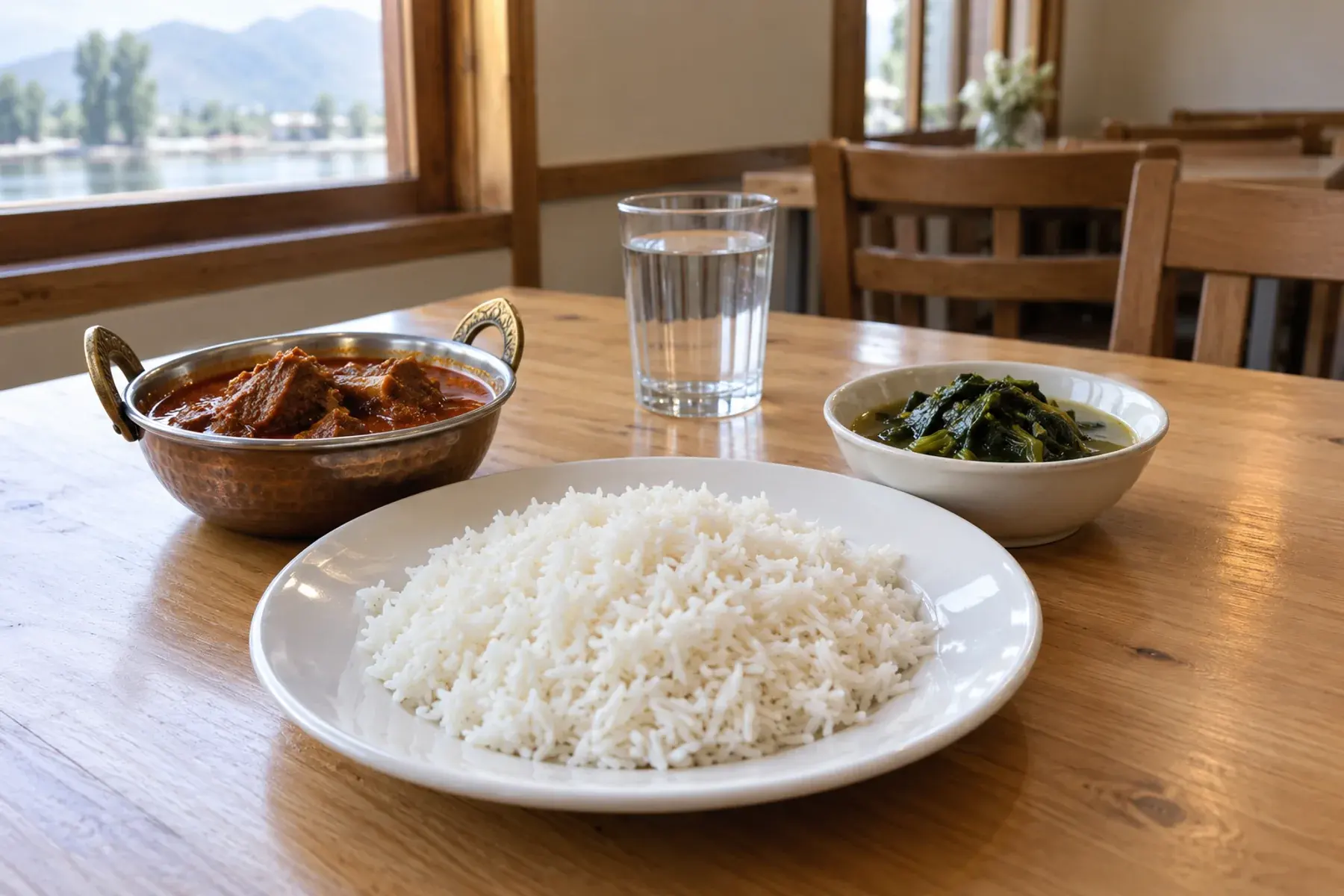
Rice is the base of the meal and plain bread and a few cold sides, such as a walnut chutney and a salad, balance the richness. Kahwa follows, to help digestion, and sweets such as phirni end the meal. If you are not used to rich food, start slowly and take small portions of each dish, and drink warm tea to ease the meal.
If you do not eat meat
A traditional wazwan is meat-based, but many restaurants offer vegetarian versions with dishes such as dum aloo, nadru, haak and paneer in local gravies. Tell the restaurant in advance, ask about stock and ingredients, and we can arrange a meal that is vegetarian or Jain with notice. A vegetarian guest at a family wazwan is generally offered sides and rice, so say so early. See our food guide for more.
Where and when to eat it
A home-hosted meal is the most authentic, and we can sometimes arrange one with a family; restaurants in Srinagar offer a wazwan menu with a fixed price per person. It suits a special evening, preferably in the second half of your trip, when you know the valley a little. Allow two to three hours and nothing planned after.
Etiquette
Wash your hands at the start, eat with your hand if you wish and share from the platter. Take what you want, leave what you do not and thank the host. If you are a guest in a home, bring a small gift. Do not waste food, and do not rush. Dress modestly for a home visit.
Planning with us
We can include a wazwan evening in a plan, with a restaurant or a home we trust, and arrange vegetarian choices on request. Tell us your dates and group size, and read our Kashmir packages or our Srinagar guide for ideas.
Questions travellers ask
What is wazwan?
Kashmir's ceremonial feast: a long sequence of rich, slow-cooked dishes, mostly meat, served on a shared platter with rice.
Is there a vegetarian wazwan?
Restaurants offer vegetarian versions with dishes such as dum aloo and nadru. Tell them in advance and ask about stock and ingredients.
How long does a wazwan meal take?
A full wazwan takes two to three hours, because the dishes arrive in a long sequence and are meant to be eaten slowly. Plan nothing strenuous afterwards.
What is rogan josh?
A lamb dish in a deep red gravy coloured by Kashmiri chillies and flavoured with fennel and ginger, one of the best known Kashmiri dishes.
Can you arrange a wazwan for our group?
Yes, where possible, with a restaurant or a home we trust. Tell us the dates and the group size.
Written by the TDI Holiday Ventures planning desk in Srinagar. Conditions, fares and rules change: confirm anything that affects your booking with us on WhatsApp before you pay.