Key facts
Last verified 12 November 2026
| Summer, roughly May to August | Fresh fruit, picnics in the meadows, lighter food and cold drinks, with the hill resorts at their busiest |
|---|---|
| Autumn, roughly September to November | Apples and walnuts, the saffron flowering near Pampore, and chinar colour |
| Winter, roughly December to February | Harissa at dawn, dried vegetables, hot kahwa and noon chai, with snow in the hills |
| Spring, roughly March to April | Fresh greens, almond blossom and tulip season, with a short, changeable window |
| Best for | Food-curious travellers who can choose their month and want the plate to match the landscape |
| How we plan it | We build one seasonal food stop into your Srinagar days, such as a dawn breakfast in winter or a fruit stop in summer |
Choose one dish or market stop to build into your Kashmir days. Fruit and fresh greens suit different travel windows from an early harissa breakfast. A long winter also shapes dishes made with vegetables dried earlier in the year. Use the seasonal tables to choose a place and time to eat. For the dishes themselves, read our Kashmiri food guide and wazwan guide.
What does Kashmir eat in each season?
| Season | Rough months | What is at its height | What to know |
|---|---|---|---|
| Spring | March to April | Fresh greens, almond blossom, the first fruit | Changeable weather; tulip season shares the same weeks |
| Summer | May to August | Fruit, picnics, cold drinks, river trout in places | Busiest weeks in the hill resorts; book meals and stays early |
| Autumn | September to November | Apples, walnuts, saffron, lotus stems | Cool days, short evenings and gold chinar leaves |
| Winter | December to February | Harissa, dried vegetables, hot tea, warm gravies | Snow in the hills; some places keep shorter hours |
The months are rough, because the start and end of a season shift by a few weeks each year. When you give us your dates we say what is likely on the plate, and we do not promise a particular dish for a particular week.
What should you eat in summer?
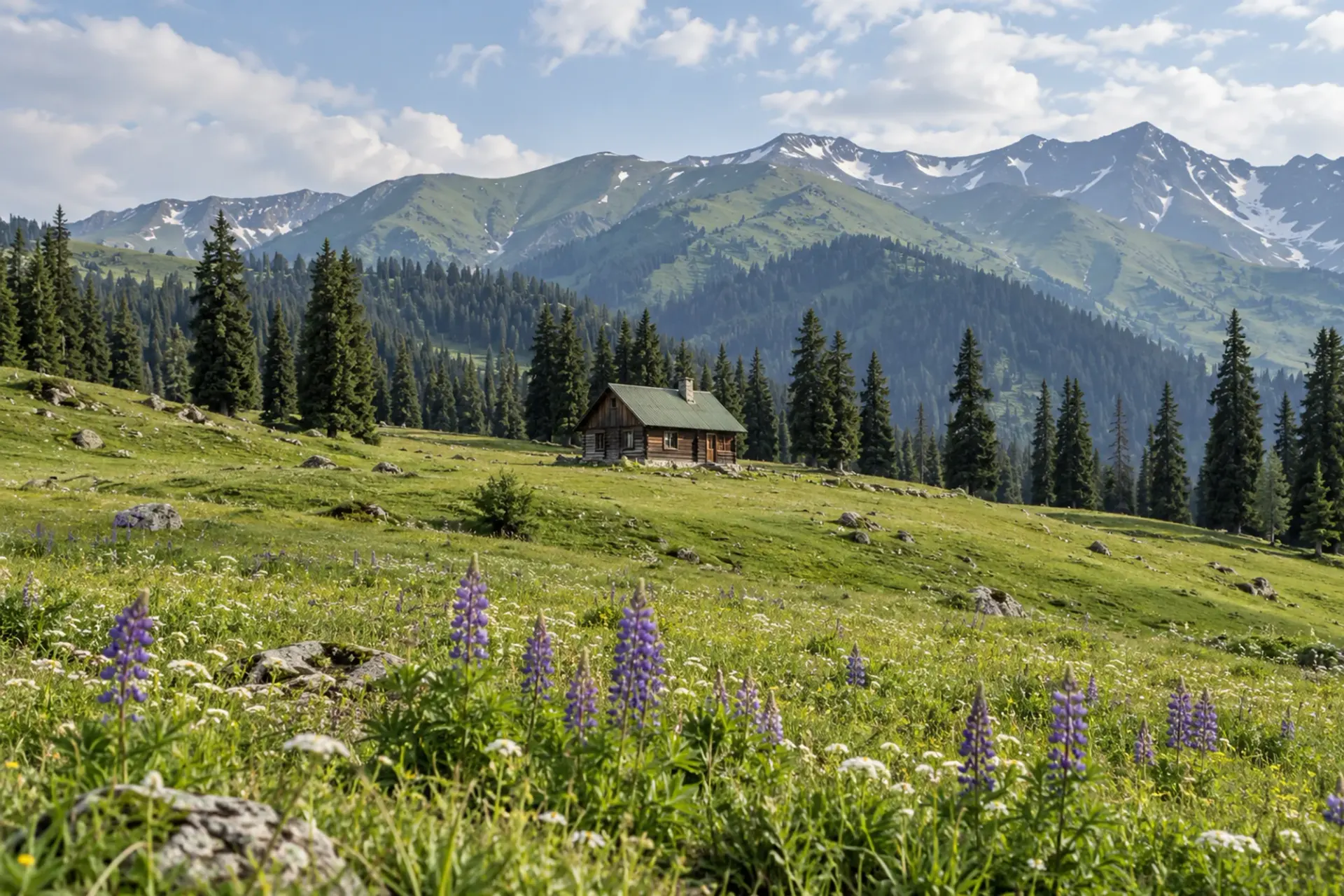
Summer is the season of fruit, picnics and light meals. Fruit stalls along the road change from week to week, starting with early fruit such as cherries and apricots and moving on to later stone fruit and pears. Families head to meadows with packed lunches, and hotels adapt by serving lighter dishes and cold drinks. Rivers and cold-water farms supply trout, which appears on some menus in places such as Pahalgam. Tea does not disappear: kahwa and noon chai are still drunk, just later in the day. See our Kashmir in summer guide and Kashmir in June for the weather, and plan food for the high meadows with care, since Doodhpathri and Yusmarg have few eateries.
What should you eat in autumn?
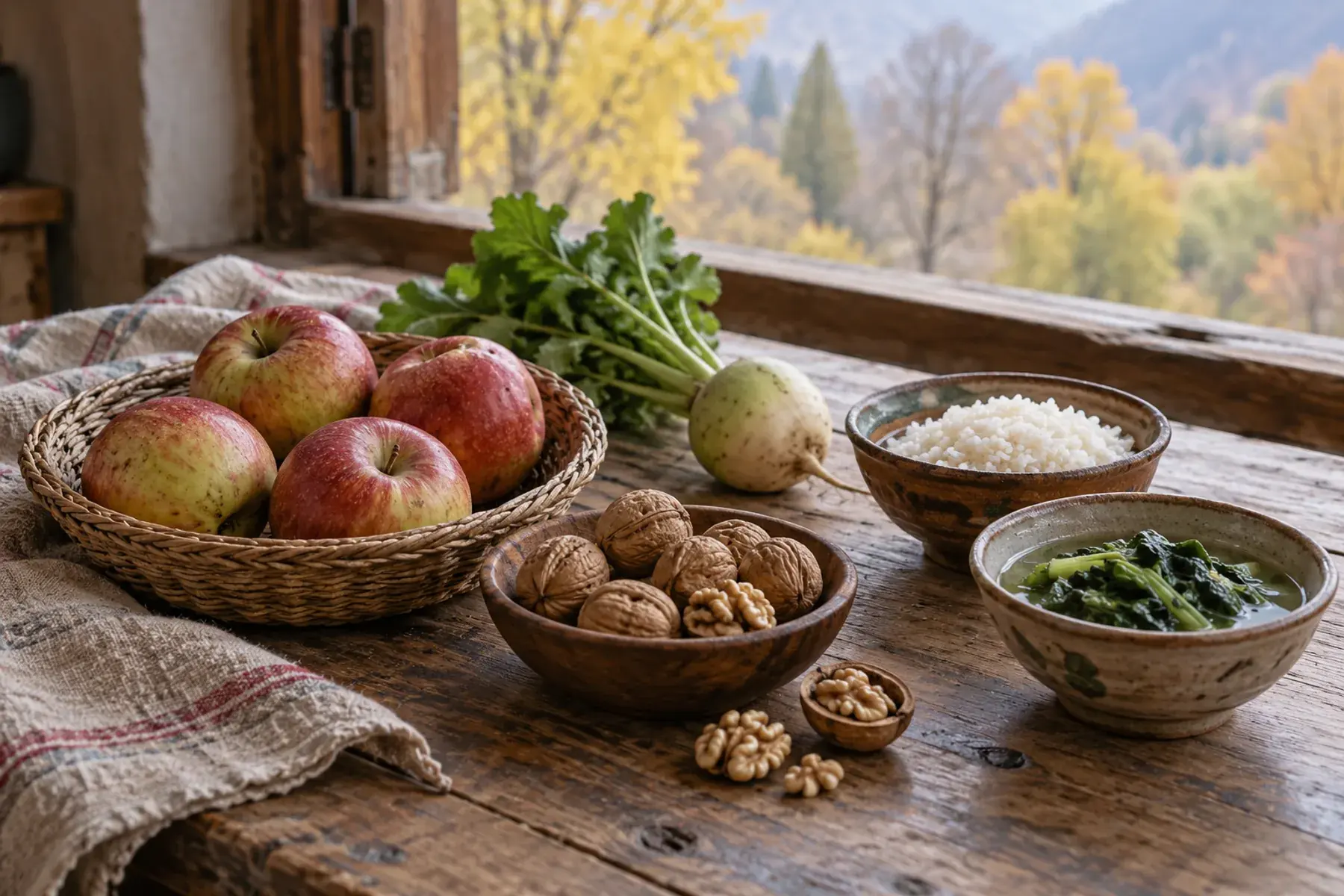
Autumn brings apples, walnuts and the saffron flowering window around Pampore, south of Srinagar. Use our distance chart to place the stop on the route. Lotus stem, or nadru, appears in dishes such as yoghurt-based nadru yakhni and crisp nadru fritters. Our guide to Kashmir in autumn covers the colour and the weather. Ask about the bloom and permission to visit before adding a field stop.
Keep a market or orchard stop flexible. Ask what is being picked or sold that week, and let the driver know whether you want a short purchase stop or time to speak with a grower. If the fields are quiet, use the time for a meal with nadru or tea in Srinagar. A shop selling saffron can be visited even when a flowering stop is unavailable.
What should you eat in winter?
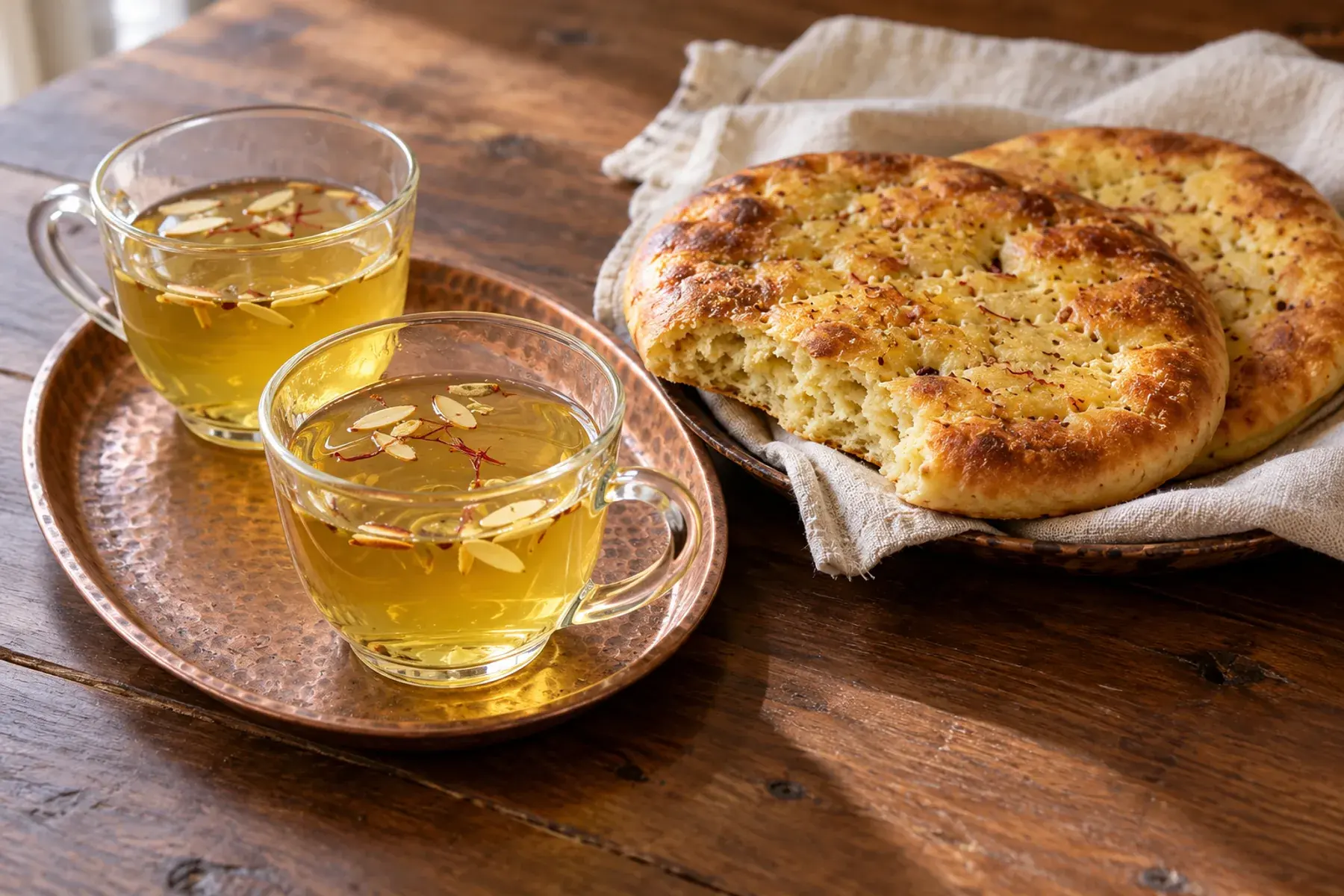
Winter food is warm, rich and preserved. The signature dish is harissa, a slow-cooked porridge of meat and rice, served at dawn during the winter months from specialist cooks, and often gone by mid-morning, so you go early or not at all. Kashmiri households also store vegetables and fish that were dried in the sun in the warmer months, called hokh syun for the vegetables, and cook them into winter gravies. Hot kahwa and noon chai are everywhere, and you will see people carrying a kangri, a small fire pot, under their cloak. Our kahwa and bakery guide covers the morning routine.
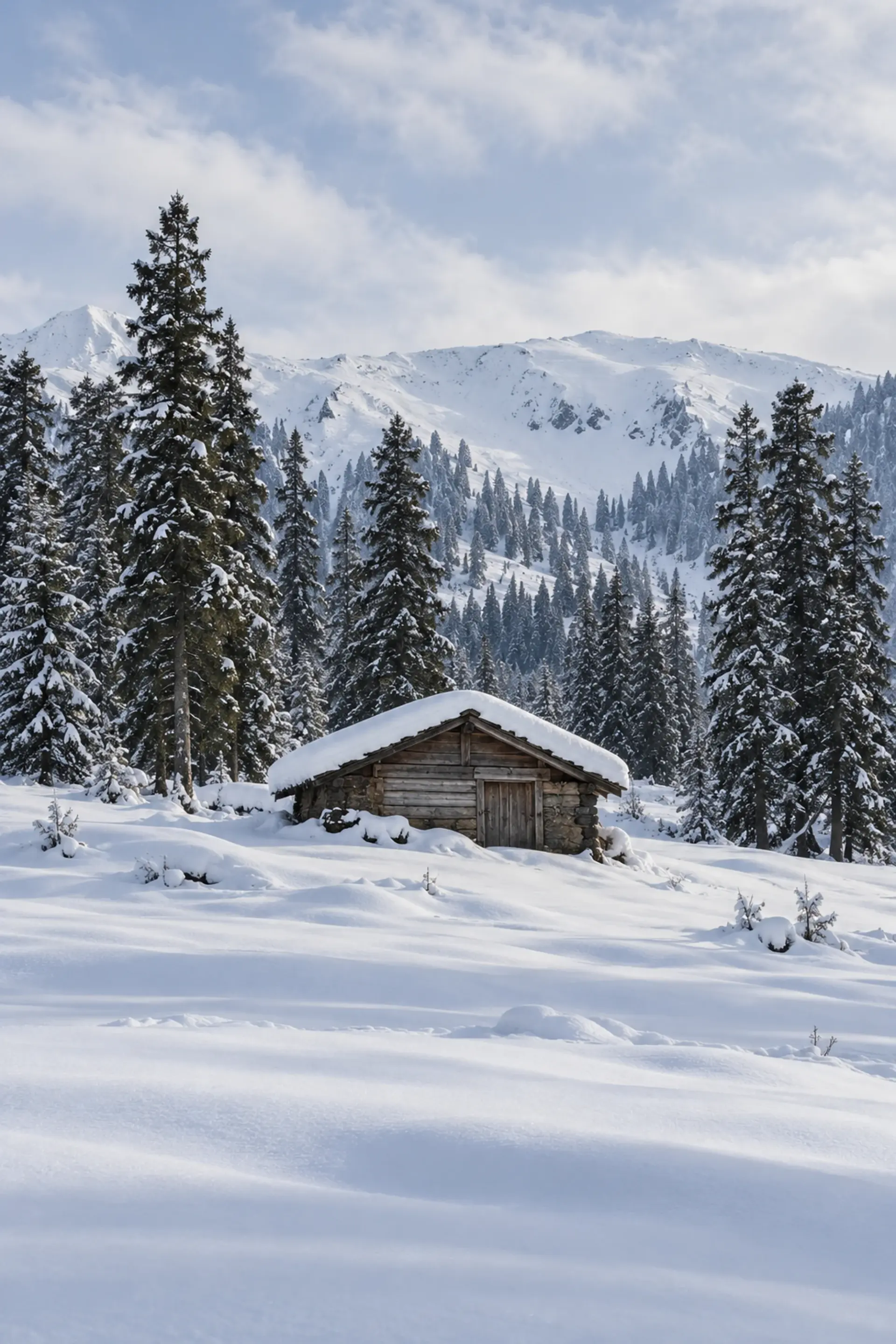
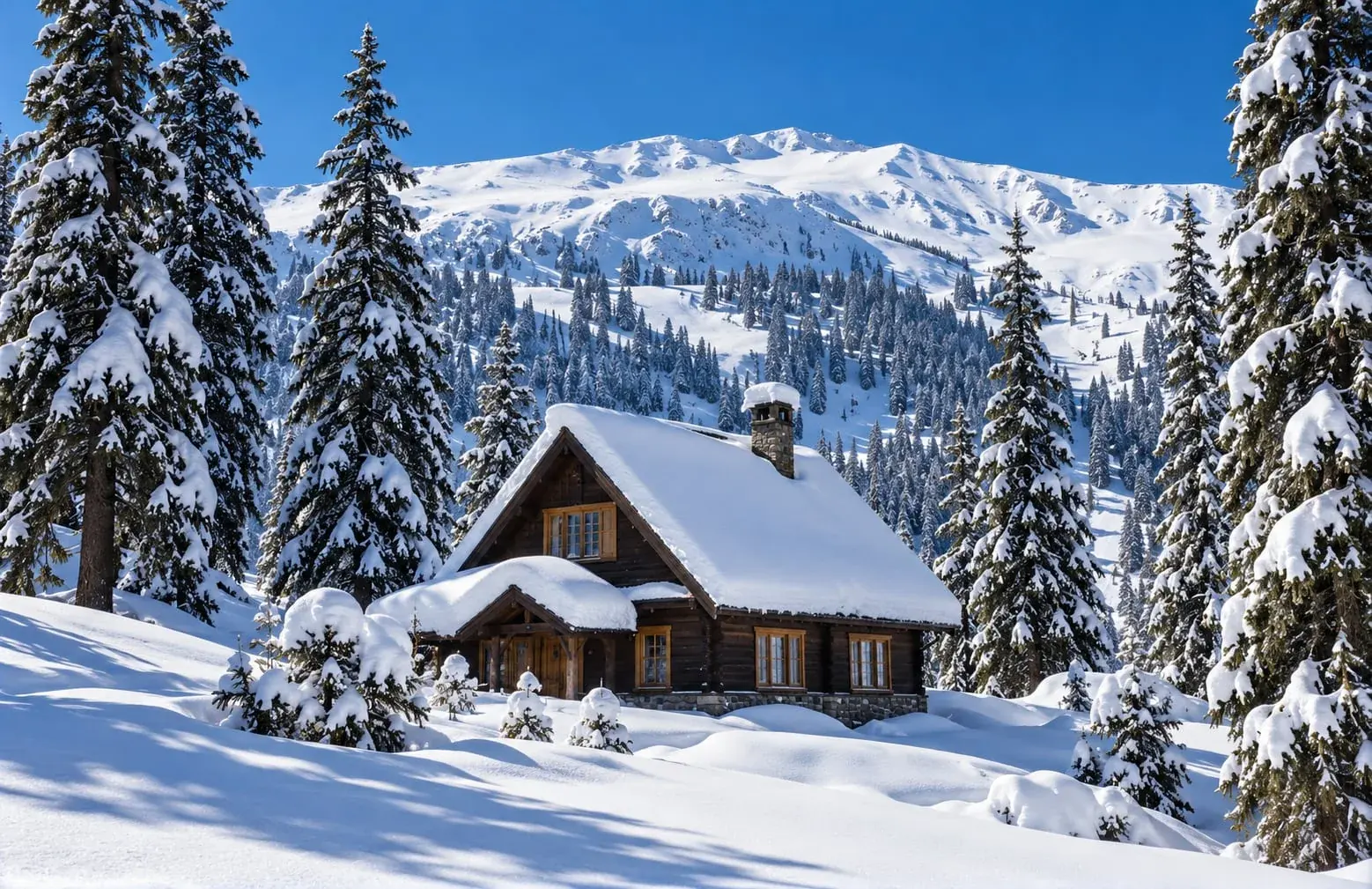
Winter is also snow season in the hills, so lunch and driving plans change. Read our Kashmir in December and Kashmir in January guides, our winter guide, and our winter snow packages.
If harissa is the reason to go out early, ask whether the cook is serving on that day and whether you can sit indoors. Leave room for a second breakfast at your stay if part of the group prefers other food or a later start. On a winter valley day, confirm where you can get a warm lunch before the drive and carry an alternative if snow changes the stop.
What should you eat in spring?
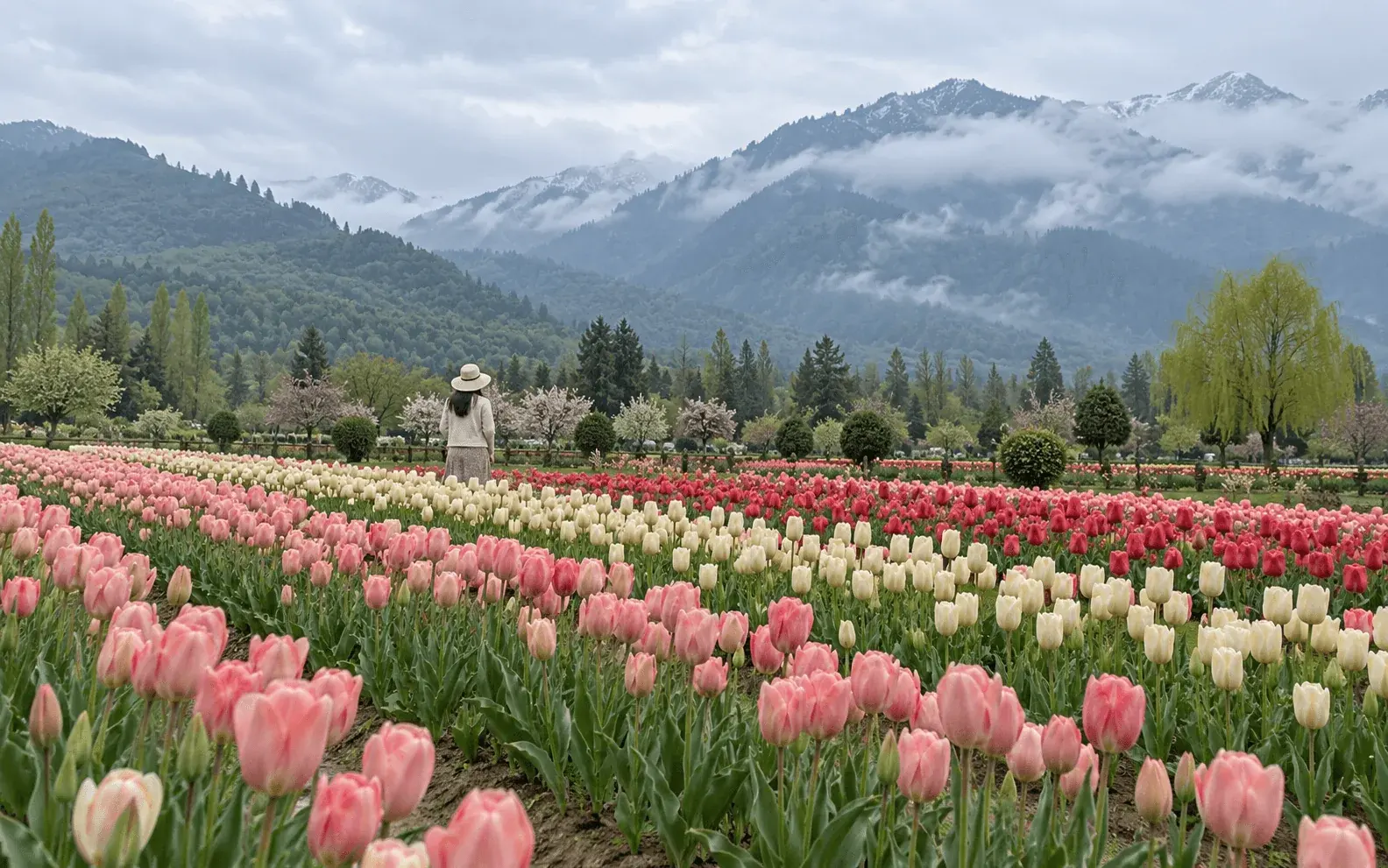
Spring is short, and it is the season of fresh greens such as haak after a long winter of dried food. The almond trees blossom and the tulips open at about the same time, so most visitors come for the flowers, but the food is part of the season. Wild mushrooms, including the prized morel that Kashmiris call guchhi, appear in the forests at some point in spring and early summer, but supply is small and variable and they are seldom on a visitor's menu. See our Kashmir in March, Kashmir in April and tulip festival guide.
Which month should you choose for the food you want?
| If you want to taste | Think about | Remember |
|---|---|---|
| Fresh fruit, picnics and cold drinks | May to August | Crowded weekends and busy hill resorts |
| Apples, walnuts and saffron | September to November | Short days; saffron flowers for a short window |
| Harissa at dawn and hot kahwa in the snow | December to February | Cold mornings, road and weather changes in the hills |
| Fresh greens with almond blossom and tulips | March to April | Rain and cold snaps are common |
| A wazwan dinner | Any month | Arranged with notice in any season |
How do the seasons change what is open?
- Summer: eateries in the hill resorts are open and crowded, so book dinners and ask your hotel to pack lunches for the long meadow days.
- Autumn: days shorten, so start early and be back before dark; roadside stalls sell fruit and dry fruit.
- Winter: some places in Gulmarg and the high valleys keep shorter hours or close, and roads can be affected by snow. Check the road on the morning of the drive.
- Spring: weather swings between warm and cold, so carry layers and plan indoor meals as a fallback.
- During Ramadan, which moves through the calendar each year, some small local eateries keep different hours while hotels continue to serve guests.
How do we fit food into your season?
Our packages, such as the 4N/5D Kashmir Classic, include daily breakfast and dinner; lunch is yours to plan, which our guide to meals on a Kashmir tour explains. Tell us the season you are travelling in and the dish you most want to try, and we build a stop around it: a dawn breakfast in winter, a fruit stop in summer, a saffron visit in autumn or a kahwa on the lake in any month. If you eat vegetarian, vegan, Jain or halal food, read our dietary needs guide.
Give the meal a place in the day rather than attaching it to the end of a long drive. An autumn field visit can fit before the Pahalgam leg if access is confirmed. A summer picnic needs a plan for collecting lunch and carrying water. For spring greens, ask the kitchen what is actually on the menu and whether it can serve a small portion alongside a familiar meal. Confirm ingredients and kitchen arrangements if anyone in the group has an allergy.
What is the next step?
Send your travel month, group size and the dishes you are curious about through our contact page. Ask the planning desk what is likely in season and how to fit it in.
Questions travellers ask
Which season is good for food in Kashmir?
Each season has its own food. Autumn offers apples, walnuts and saffron, winter offers harissa and hot tea, summer offers fruit and picnics, and spring offers fresh greens. Choose the month for the dishes you most want to try, and remember that weather and roads matter as much as the menu.
What is harissa and when is it eaten?
Harissa is a slow-cooked porridge of meat and rice, served at dawn during the winter months by specialist cooks. It is often gone by mid-morning, so go early. It is a winter dish, so you will rarely find it in summer. Ask us to arrange an early start.
When is saffron harvested in Kashmir?
The saffron crocus flowers in autumn, in the fields around Pampore near Srinagar. The flowering window is short and shifts a little each year. If you want to see it, tell us your dates and ask whether the fields are likely to be in flower.
What fruit can I eat in Kashmir in summer?
Early summer brings cherries and apricots, and the fruit stalls change week by week, with later stone fruit and pears following. Apples come in autumn. Buy from busy stalls, wash fruit before eating, and ask your driver where he buys from.
Is wazwan available all year?
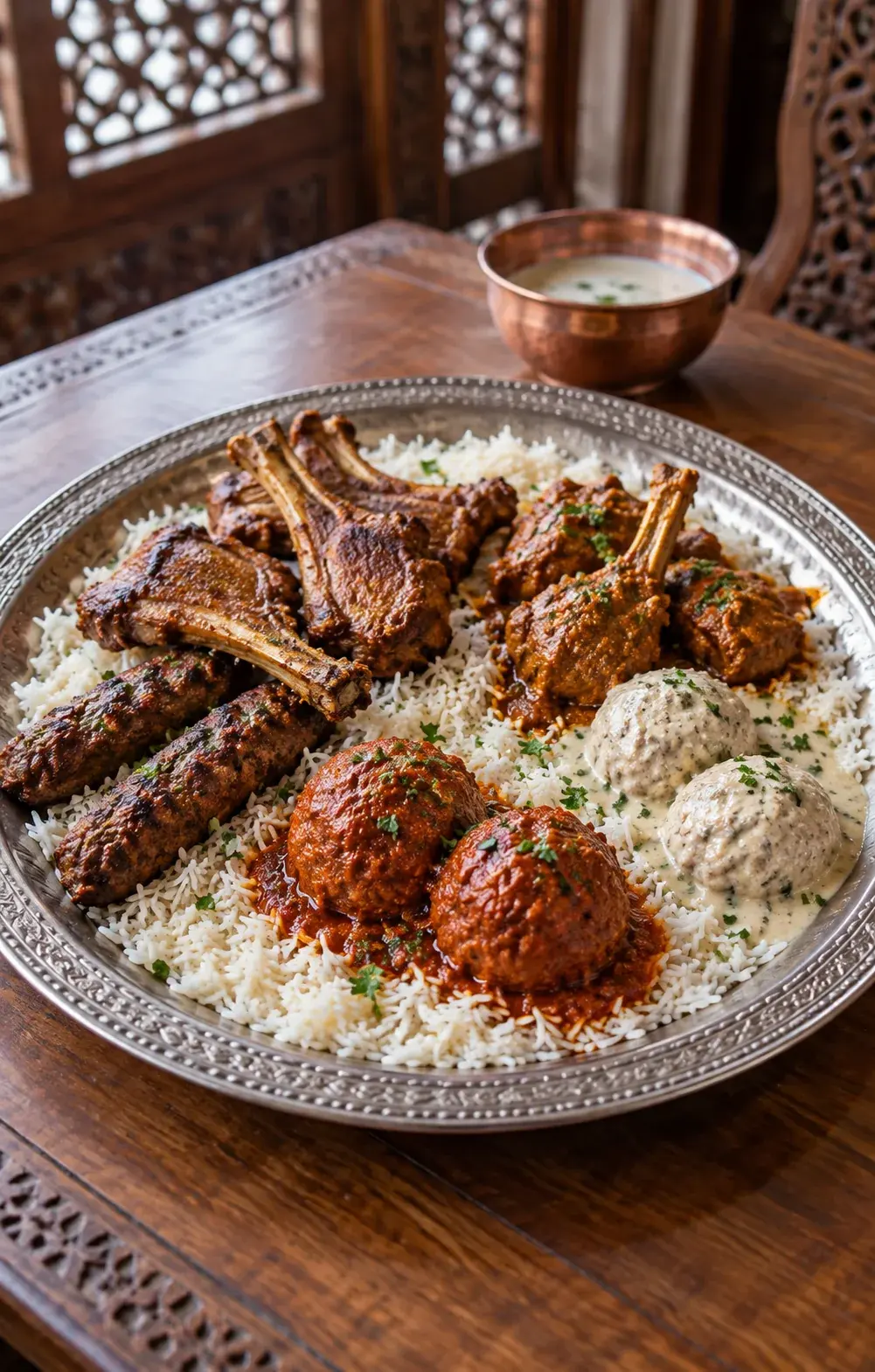
A wazwan dinner can be arranged in any season with notice, because it is cooked to order. Ask for the venue and the notice for your dates before you pay.
Do restaurants close in winter in Kashmir?
Most places in Srinagar carry on, but some eateries in the hill resorts and the high valleys keep shorter hours in winter or close when snow affects the roads. Check what is open for your dates before you travel and again on the morning of an excursion.
Editorial check
Facts last verified 12 November 2026. Confirm current conditions, fares and rules before booking.
Updated
Planning your Kashmir trip?
Let our 25-year local team build it.
Tell us your dates and budget so the Srinagar team can suggest an itinerary and quote for your group.