Key facts
| What it is | A multi-course Kashmiri feast, mostly of lamb or mutton, served communally with rice |
|---|---|
| Who cooks it | Master cooks called wazas, traditionally for weddings and big gatherings |
| How it is served | Four guests share a large copper platter called a trami, after a hand-washing ritual |
| How long it takes | Two to three hours for a full meal, so schedule it as the evening's main event |
| For visitors | A private dinner or a restaurant wazwan, booked a day or two ahead, with diet and group size stated |
| How to plan it | Add a wazwan evening to a Srinagar stay as its own line, and ask for the venue and notice for your date |
A menu in Srinagar might use the word wazwan for a few familiar dishes or for a long dinner served on a shared platter. Ask what the host has in mind before reserving the evening. A tasting suits travellers who want to try a few preparations, while a private meal gives a group time to sit together and let the dishes arrive in order. Start with the beginner's guide to wazwan or the wider Kashmiri food guide if you are still deciding what you would like to try.
What is wazwan?
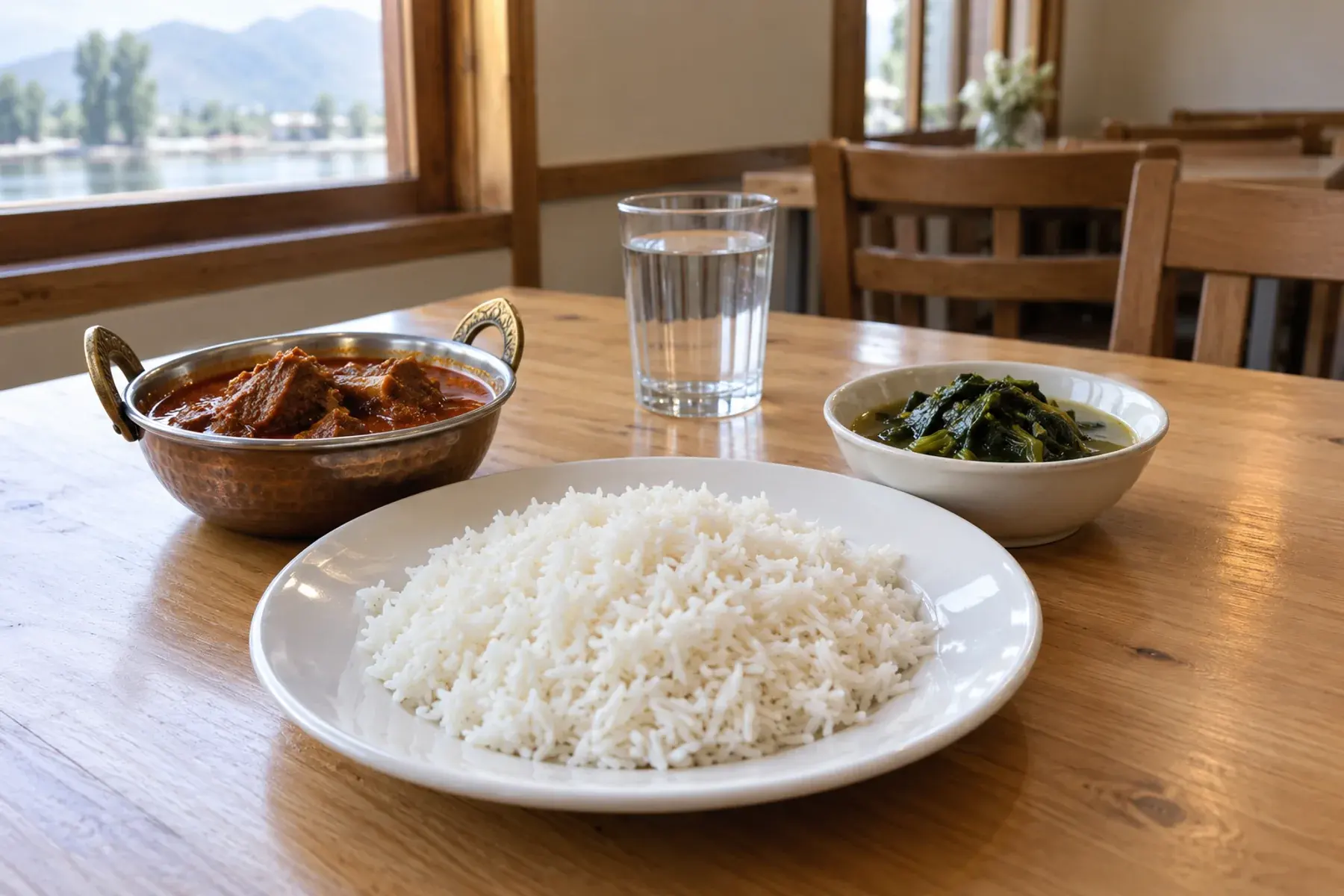
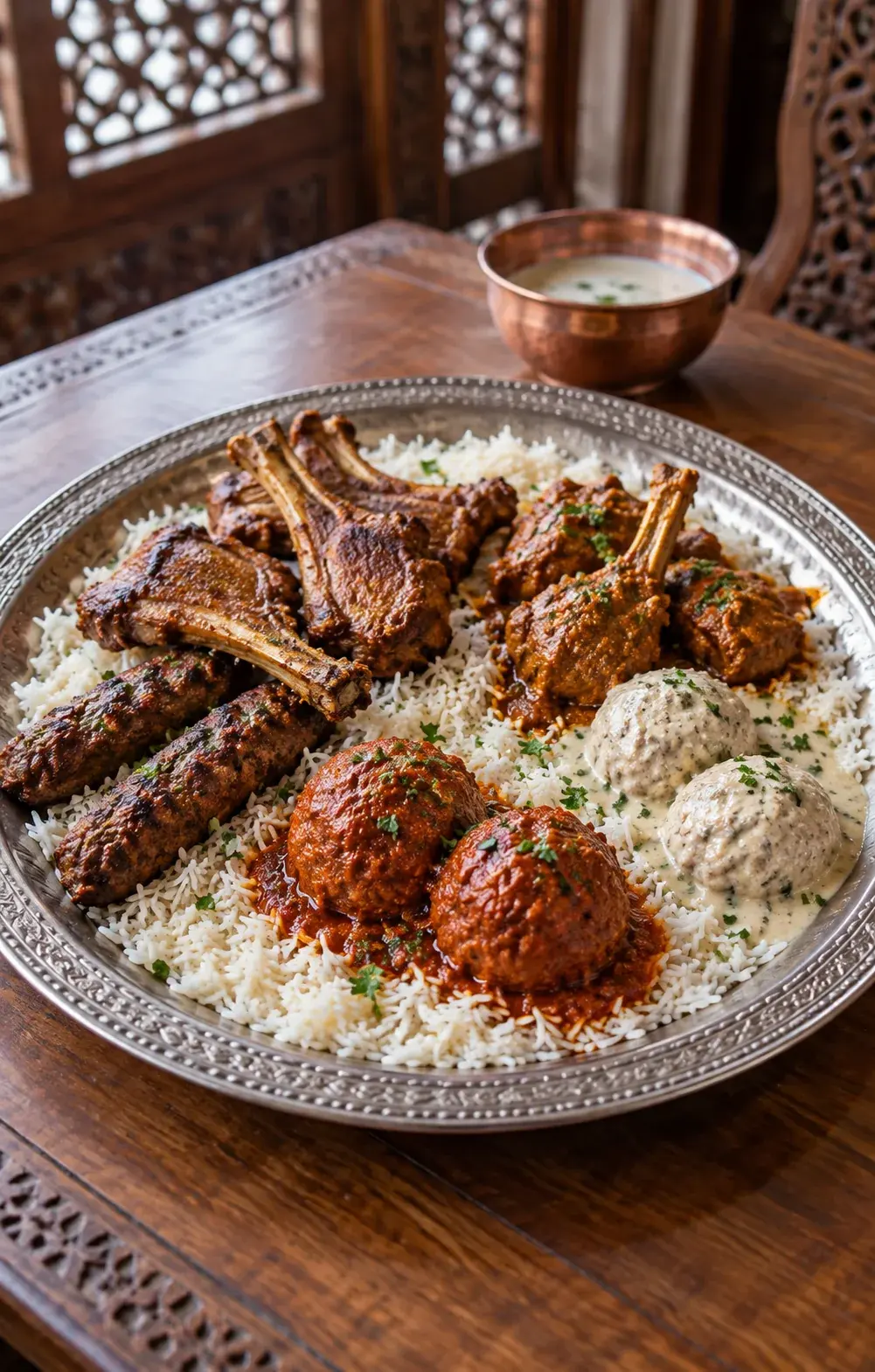
Wazwan is the ceremonial feast of Kashmir, rooted in the cooking of Persian and Central Asian traditions and refined in the valley over many centuries. The word is used for the whole banquet, and a waza is the master cook who prepares it, usually with a team that works through the night over wood fires. It is mostly lamb or mutton, cooked in different ways, with plenty of rice, and it is made for big occasions, above all weddings. A full wazwan is often described as having up to thirty-six dishes; the versions served to visitors and in restaurants are usually shorter.
What are the courses?
Every waza has a style and every occasion a different list, so treat the table as a guide to what you are likely to meet, not a fixed menu. Roughly, the meal moves from drier, richer dishes towards gravies, with gushtaba traditionally the last main dish, and then a sweet and tea.
| Dish | What it is | What to know |
|---|---|---|
| Tabak maaz | Lamb ribs, simmered and then fried until crisp | Often the dish guests remember most |
| Seekh kebab | Minced meat on skewers, grilled | A familiar dish in a Kashmiri style |
| Rista | Pounded meatballs in a deep red gravy | Rich, with a strong colour |
| Rogan josh | Lamb in a red gravy | The colour traditionally comes from dried cockscomb flower and mild Kashmiri chilli, not from heat |
| Aab gosh | Lamb cooked in milk | A mild, creamy dish |
| Daniwal korma | Lamb in a coriander and yoghurt gravy | Light and fresh |
| Marchwangan korma | Lamb in a red, chilli-forward gravy | Usually the hottest dish on the table |
| Yakhni | A yoghurt-based curry with fennel and dry ginger | Milder, aromatic |
| Gushtaba | Hand-pounded meatballs in a yoghurt gravy | Traditionally served last among the main dishes |
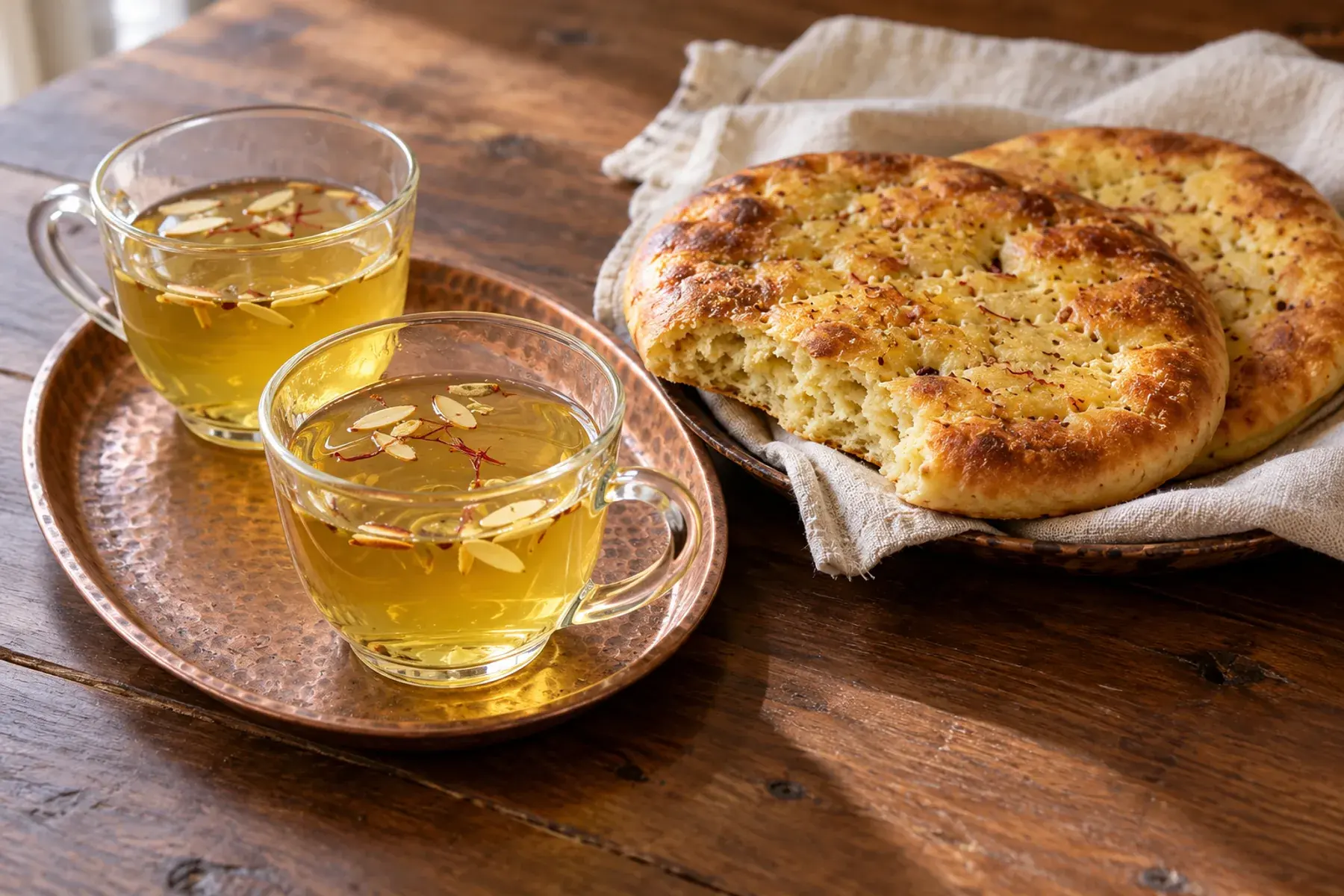
| Phirni and kahwa | A ground-rice pudding and saffron tea | A gentle close; kahwa often comes last |
Rice is the base of the meal and is shared in the middle of the platter. Dishes arrive in turn, so you do not see them all at once, and the pace is part of the experience.
How does a wazwan meal run?
- Hand-washing: a host pours warm water over each guest's hands from a basin and ewer, a gesture of welcome.
- Seating: four guests sit around one large copper platter, the trami.
- Rice and the first dishes: the platter is set with rice, and the first courses arrive, shared from the middle.
- The sequence of gravies: dishes follow one after another, each a different flavour.
- Gushtaba and the close: the meatballs mark the end of the main dishes, followed by a sweet and tea.
- Leaving: thank your host, and the cook if you can; sampling each dish along the way is polite.
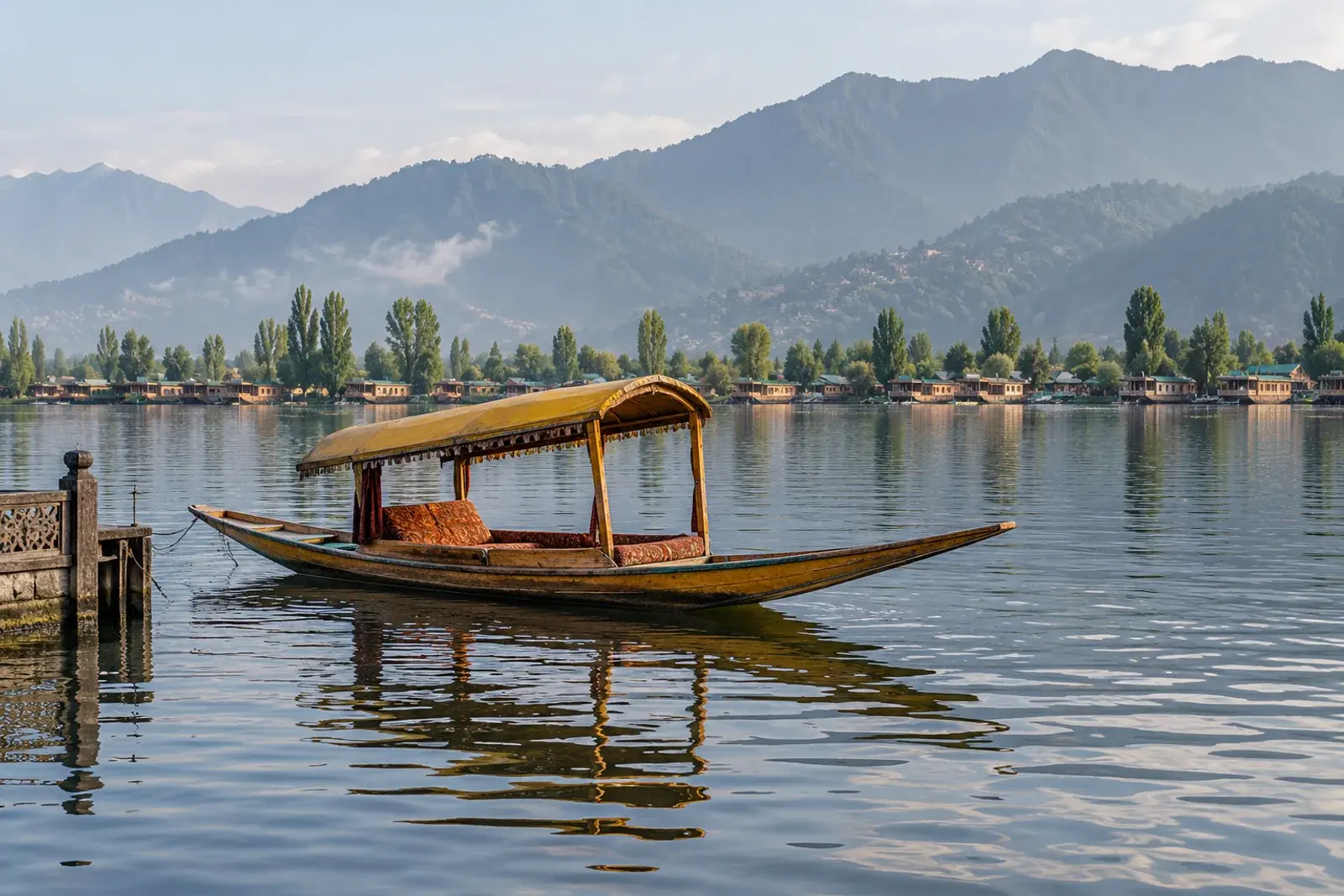
Set aside two to three hours for the full meal. If dinner is on a houseboat and your room is across the lake, ask when the last courses are likely to finish and arrange the return crossing with your host. For an early departure the next morning, ask a restaurant about a shorter tasting at lunch, or move the dinner to an evening with a later start the following day.
Where can a visitor eat wazwan in Srinagar?
| Option | What it is | Notice and fit |
|---|---|---|
| A private dinner arranged through a host or operator | A cook prepares a set menu for your group, sometimes on a houseboat deck | Needs notice, because the cook plans for your group; ask for the notice and the cost for your date |
| A restaurant with a wazwan menu | A shorter, restaurant-style set of courses on a platter | Ask the day before; some offer a trami for four or more |
| A home meal | A family cooks for guests | Usually by invitation or through a trusted host; not something to turn up for |
| A wedding feast | The real thing, with a waza and hundreds of guests | For invited guests only; do not expect to attend as a visitor |
We do not list restaurant names on this page. If you would like a suggestion, ask our planning desk in Srinagar and tell us your group size, your diet and the evening you have in mind. Our Dal Lake houseboat page and Srinagar sightseeing tour show how an evening can fit into a city stay.
What should you ask when you book?
- How many courses are included, and which ones, so that you know what you are paying for.
- The price per person, and whether it is per head or per platter.
- The minimum group size. A trami seats four, so odd numbers can mean a smaller platter or a shared one.
- The time the meal starts and how long it runs.
- Dietary needs: no meat, no dairy, allergies or very mild food, stated clearly in advance.
- How much notice is needed, and what happens if you change the date.
- Whether drinks, tea and dessert are included.
- Whether the venue is suitable for older guests or small children, with steps and seating in mind.
Compare the actual menus when deciding between a restaurant platter and a private dinner. A restaurant may include the dishes you wanted to try in a small set, leaving the evening open. A private booking makes more sense if the whole group wants the slower, shared meal and a suitable table can be reserved. Ask whether you will have an individual setting, a platter for your party or a shared platter with other diners. Give the venue your headcount before comparing the per-person and per-platter prices.
What if you do not eat meat?
Ask about a separate Kashmiri meal with dishes such as dum aloo and paneer if you avoid meat. Have the host describe what they can prepare before you confirm, especially for a vegan, Jain or no-onion and no-garlic meal. Guests who need halal meat should ask the venue about its source. For an allergy, speak to the person responsible for the kitchen about ingredients, the shared platter and separate utensils and preparation. Tell us the group's requirements at enquiry so they can be discussed alongside the breakfast and dinner plan for your package.
How do you fit wazwan into a Kashmir trip?
Treat it as the main event of an evening in Srinagar. Good moments are the night after a day in the gardens, an evening on a houseboat or the last night of the trip. Avoid the night before a long drive to Sonmarg or Pahalgam. If anyone in the group is older, young or has a sensitive stomach, tell the host in advance so the dishes can be milder, and consider a smaller tasting. Our family trip guide and elderly parents guide cover pacing.
What is the etiquette?
- Wait for the host to begin, and follow the host's lead.
- Use your right hand, and eat from the part of the platter nearest you.
- Sample each dish, even briefly; it is a courtesy to the cook.
- Pace yourself. The meal is long and the richest dishes come early.
- Ask if you are unsure about a dish; hosts are glad to explain.
How can TDI add a wazwan evening to your trip?
Tell us which Srinagar night you have free and whether everyone wants the full meal. Ask whether a private dinner on a houseboat deck is available and how much notice it needs. Ask for the venue, courses, meal requirements and cost as a separate line in your quote. On a half-board itinerary such as 4N/5D Kashmir Classic, ask how the optional wazwan evening fits with the breakfast and dinner already in your booking.
What is the next step?
Send your dates, the group size, any dietary needs and whether you prefer a houseboat evening or a restaurant through our contact page. The planning desk in Srinagar replies on WhatsApp.
Questions travellers ask
What is wazwan, in simple terms?
Wazwan is Kashmir's ceremonial multi-course feast, cooked by master cooks called wazas and served on a shared copper platter called a trami, with rice. It is mostly lamb or mutton, made for weddings and big occasions. Versions served to visitors are usually shorter than the full banquet.
How many courses are there in a wazwan?
A full banquet is often described as having up to thirty-six dishes, but the versions served to visitors and in restaurants are usually shorter, with perhaps a dozen or so. Ask any host how many courses are included and which ones, so you know what you are paying for.
Can a vegetarian eat wazwan?
The classic wazwan is a meat feast. The Kashmiri Pandit community has its own vegetarian tradition, and many Srinagar caterers can arrange a vegetarian version on request. Tell the host or us when you book, and ask exactly what will be served, since vegetarian menus are not the default.
How much notice does a wazwan dinner need?
A private dinner needs notice, because the cook plans the food for your group, and the notice depends on the venue and the number of guests. A restaurant may need a day. Ask for the notice and the venue for your date before you pay.
How long does a wazwan meal take?
Allow two to three hours for a full meal. The dishes arrive in turn and the pace is part of the experience. Schedule it as the main event of the evening, and avoid the night before a long drive or an early start.
Is wazwan very spicy?
Not all of it. Rogan josh is red because of colouring and mild chilli rather than heat, and several dishes, such as aab gosh and yakhni, are mild. Marchwangan korma is the hot one. Tell the host if you want the meal mild, and ask for the spicy dish to be served separately.
Is the meat in wazwan halal?
Wazwan is a Kashmiri Muslim tradition, and the meat is generally halal. If this matters to you, ask the host or restaurant to confirm when you book. We can ask on your behalf if the dinner is arranged through us.
Editorial check
Written by the TDI Holiday Ventures planning desk in Srinagar. Confirm any travel conditions, fares or rules that affect your booking before paying.
Updated
Planning your Kashmir trip?
Let our 25-year local team build it.
Tell us your dates and budget so the Srinagar team can suggest an itinerary and quote for your group.