Key facts
| Kahwa | Green tea with saffron, cardamom, cinnamon and crushed almonds, often brewed in a brass or copper samovar |
|---|---|
| Noon chai | A pink, lightly salted milk tea, also called sheer chai, drunk mostly in the morning with bread |
| Bakeries | Neighbourhood bakers, called kandurs, sell fresh breads and sweet biscuits from early morning |
| Best for | First-time visitors, families, older travellers and anyone who wants an easy, inexpensive taste of local life |
| How long people give it | A cup of kahwa takes ten minutes, a bakery breakfast about an hour, a tasting walk through the old city half a morning |
| How to plan it | Leave one early morning free in Srinagar for a bakery breakfast and a kahwa stop, and ask for places |
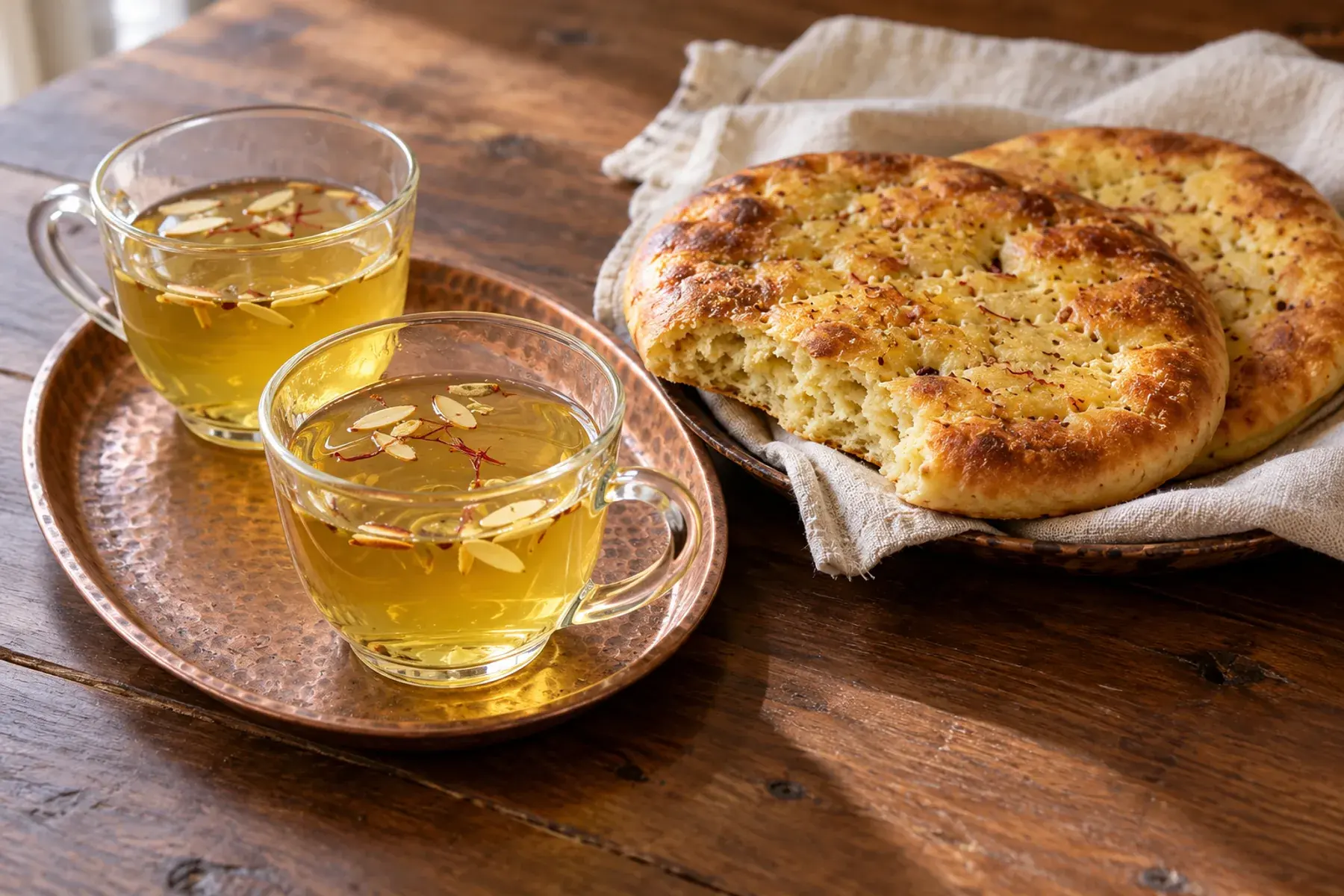
Try kahwa and noon chai at different times on the same Srinagar day. Kahwa is fragrant green tea with spices. Noon chai is the pink, salted tea that often accompanies bread in the morning. Give yourself time to ask a neighbourhood baker what is fresh and what goes into it. For the valley's other dishes, start with our Kashmiri food guide and wazwan guide.
What is kahwa?
Kahwa is a green tea simmered with whole spices and finished with saffron and crushed almonds or walnuts. It is thin, golden and aromatic, not milky, and it is served in small cups, usually without a lot of sugar unless you ask. It is the drink of welcome: in homes, shops, houseboats and hotel lobbies, kahwa is what arrives first and what ends a meal. The tradition is tied to Kashmir's cold climate and its old trade links with Central Asia, and the pot used for it, the samovar, is still a familiar sight in the old city.
| What goes in | What it adds | Can be left out? |
|---|---|---|
| Green tea leaves | The base of the drink | No |
| Cardamom and cinnamon | Warmth and sweetness of aroma | Ask for fewer if you dislike strong spice |
| Saffron strands | Colour and a floral note | Some cheaper cups use very little |
| Crushed almonds | Body and a nutty finish | Ask about the brew and shared utensils if you have a nut allergy. A cup without garnish may still contain nuts. |
| Sugar or honey | Sweetness | Yes; many places add it at the table |
Every household has its own proportions, and some add a few petals or a pinch of dry ginger. Treat the table as the usual pattern, not a recipe to hold anyone to.
When ordering, ask whether the spices and nuts are already in the pot or added to each cup. For someone who avoids honey, ask if the tea is sweetened before it is poured. If the group wants to try both teas, order the drinks before choosing bread so the baker or host can tell you what pairs with the cup they are serving.
What is noon chai, and why is it pink?
Noon chai means salt tea. It is made from a special kind of tea leaf boiled for a long time with a little baking soda, then mixed with milk and salt. The long boiling is what turns the tea a deep rose or pink. Many visitors expect it to be sweet and are surprised, so sip it before you decide. People usually drink it in the morning, from a cup or a tea glass, with bread from the bakery. It is also called sheer chai, and you may see it called pink tea on menus aimed at visitors. If you do not like salt in tea, ask for a milder cup or try it once and return to kahwa.
| Kahwa | Noon chai | |
|---|---|---|
| Colour | Pale gold | Pink to rose |
| Taste | Spiced and floral, lightly sweet | Milky and salty, with a rounded flavour |
| Milk | No | Yes |
| When people drink it | Through the day, after meals, on arrival | Mostly the morning, with bread |
| Usually served with | Almonds, a sweet or a biscuit | Girda, bakarkhani, tsot or plain bread with butter |
| Vegan-friendly? | Usually, if you skip honey | No, it has milk |
What is a Kashmiri bakery, and what should you buy?
A bakery in Kashmir is a kandur: a baker who bakes breads in a tandoor-style oven and sells them from a counter, often opening before dawn. Locals buy bread for the day here rather than cooking it at home, which is why a kandur is busiest early. Standing in a queue for hot bread is a better introduction to a neighbourhood than most sightseeing. Names and shapes vary from baker to baker, so use the table as a guide and let the person behind the counter tell you what is freshest.
| Bread or biscuit | What it is | How people eat it |
|---|---|---|
| Girda | A round, flat, crusty bread | With butter and tea, or with noon chai at breakfast |
| Lavasa | A thin, soft, large flat bread | Torn and used to scoop up or wrap kebabs and curries |
| Tsot | A small round bread with a firm crust | A breakfast staple, with butter or jam |
| Tsochwor | A small ring-shaped bread, often sprinkled with poppy seeds | With tea, plain or buttered |
| Bakarkhani | A thick, crisp, layered bread | Dipped in tea, or on its own as a snack |
| Sheermal | A soft, slightly sweet bread enriched with milk, sometimes with saffron | With tea, or beside a savoury dish |
| Kulcha | A small, crumbly biscuit, quite unlike the stuffed kulcha of north India | With kahwa or noon chai |
| Katlam | A flaky, layered round bread | Warm, with tea |
| Roth | A large, sweet, rich bread made for celebrations and offered at shrines | Shared in pieces; often bought as a gift |
Ask the baker which breads use ghee, milk or an egg wash. For a vegan order, ask about the dough, any glaze and what is added after baking. For an allergy, check both ingredients and shared trays or utensils, and choose another option if the baker cannot confirm. Our dietary guide covers the questions in more detail.
Where can you try them in Srinagar?
| Setting | What to expect | Our advice |
|---|---|---|
| Your houseboat or hotel | Kahwa on arrival or after dinner; noon chai and bread at breakfast if you ask | Ask the evening before so the kitchen has bread ready |
| A neighbourhood kandur | Hot bread by the piece, a short queue, little seating | Go early, take cash in small notes and eat standing or take it back |
| The old city lanes | Several bakers and tea shops in a short walk | Combine with our old Srinagar heritage walk guide |
| Dal Lake | A kahwa stop on a shikara ride may be possible | Agree the price before you start; see our shikara booking page |
| Gulmarg, Pahalgam and Sonmarg | Tea stalls and cafés serving kahwa and noon chai, plus snacks | A hot cup is most welcome after a cold morning on the meadow |
We do not list shop names on this page. If you want a suggestion for a bakery or a kahwa stop near where you are staying, tell the planning desk where that is and what time you are free.
If your morning starts with an old-city walk, plan the bakery before the first scheduled visit. Ask if there is room to sit or whether you should take the bread back to the hotel. With a larger party, agree how long to stop and buy small portions to share. A later lake ride leaves time to try kahwa separately and check whether the tea and ride have separate prices.
How should you order, and what should you watch for?
- Ask for the price before you order anything that is not on a printed menu, and again before a kahwa stop on the water.
- At a bakery, buy two or three different pieces first. You can always go back for more.
- Choose busy places: fast turnover means fresh bread and fresh tea.
- Say plainly if you have a nut allergy. Almonds and walnuts are in many sweets and in kahwa itself.
- If you are sensitive to salt, ask for a small cup of noon chai.
- If a drink or snack is offered to you as a gift in someone's shop or home, accept with thanks; paying for a large purchase later is a separate matter.
How do you make kahwa at home?
- Bring water to a gentle boil with a few green cardamom pods and a small piece of cinnamon.
- Add green tea leaves and let the pot simmer for a few minutes.
- Add a few strands of saffron and turn off the heat so it steeps.
- Strain into small cups, add crushed almonds, and sweeten with sugar or honey if you like.
Quantities depend on the cup and your taste. Start light on the spices and adjust on the second brew.
What can you carry home?
Ready-made kahwa mixes, saffron and dry fruit are common gifts. Buy sealed, labelled packs from a shop you can contact again. Check the ingredient list, storage instructions and receipt. Eat the softer breads while they are fresh, and ask the baker how to pack kulcha biscuits or bakarkhani for the journey. Read our handicrafts and shopping guide for other purchases. Check the baggage and destination rules for food before flying home.
How do kahwa and bakeries fit into a Kashmir trip?
The simplest way is to give yourself one unhurried morning in Srinagar. Walk to a kandur for a bakery breakfast with noon chai, take a short stroll, and end with a kahwa on the lake in the afternoon light. If you arrive on an evening flight, a hot kahwa at your houseboat or hotel is a gentle first taste. Our Srinagar sightseeing tour and Dal Lake houseboat stays give you the setting, and packages such as the 4N/5D Kashmir Classic include daily breakfast and dinner, so a bakery breakfast is a pleasant addition rather than a replacement. Tell us if you want to leave one morning open.
What is the next step?
Send your dates, where you are staying in Srinagar and any dietary needs through our contact page. Ask the planning desk for a bakery breakfast and a kahwa stop that fit your plan.
Questions travellers ask
What is kahwa made of?
Kahwa is green tea simmered with cardamom and cinnamon, finished with a few strands of saffron and crushed almonds, and sweetened with sugar or honey. It has no milk. Each household has its own mix, and some add dry ginger or petals.
Is kahwa the same as green tea?
Kahwa starts from green tea but is a different drink. The whole spices, the saffron and the almonds give it a golden colour, a floral aroma and a nutty finish. Ordinary green tea is plain and more bitter. Kahwa is closer to a spiced welcome drink than to a cup of tea.
Why is noon chai pink and salty?
Noon chai means salt tea. It is made from a special tea leaf boiled for a long time with a little baking soda, then mixed with milk and salt. The long boiling gives the pink colour. It is a morning drink, taken with bread, and the saltiness surprises many first-time visitors.
Is Kashmiri bakery bread vegetarian?
Most of it is. Girda, lavasa, tsot and bakarkhani are bread products, but some use ghee, milk or an egg wash, and sweet breads can contain dairy and nuts. If you are strictly vegetarian, vegan or allergic, ask the baker what goes into a piece before you buy.
Is kahwa suitable for vegans?
Ask whether the tea or mix contains honey or dairy and whether the biscuit served with it uses either. Kahwa can also contain almonds or walnuts. If you have a nut allergy, ask about the pot and utensils as well as the garnish.
When is the right time to drink kahwa and noon chai?
Kahwa is welcome at any time, especially after a meal or on a cold afternoon. Noon chai is mostly a morning drink, served with bread. Early morning is also when the neighbourhood bakers have their hottest bread, so a combined breakfast is the natural way to try both.
Can I buy kahwa and bakery items to take home?
Yes. Sealed kahwa mixes, saffron and dry fruit travel well, and kulcha biscuits and bakarkhani keep longer than soft breads. Buy from a shop with labelled packs, avoid anything priced too low for the quantity, and keep your receipts. Ask us if you want a suggestion for a reliable shop.
Editorial check
Written by the TDI Holiday Ventures planning desk in Srinagar. Confirm any travel conditions, fares or rules that affect your booking before paying.
Updated
Planning your Kashmir trip?
Let our 25-year local team build it.
Tell us your dates and budget so the Srinagar team can suggest an itinerary and quote for your group.