Key facts
Last verified 12 November 2026
| Nishat Bagh | Lake-to-hillside terraces along a central water axis. |
|---|---|
| Shalimar Bagh | Long channel, chinar avenues and former royal audience spaces. |
| Chashme Shahi and Pari Mahal | A spring garden and a separate hilltop visit. Confirm access at each. |
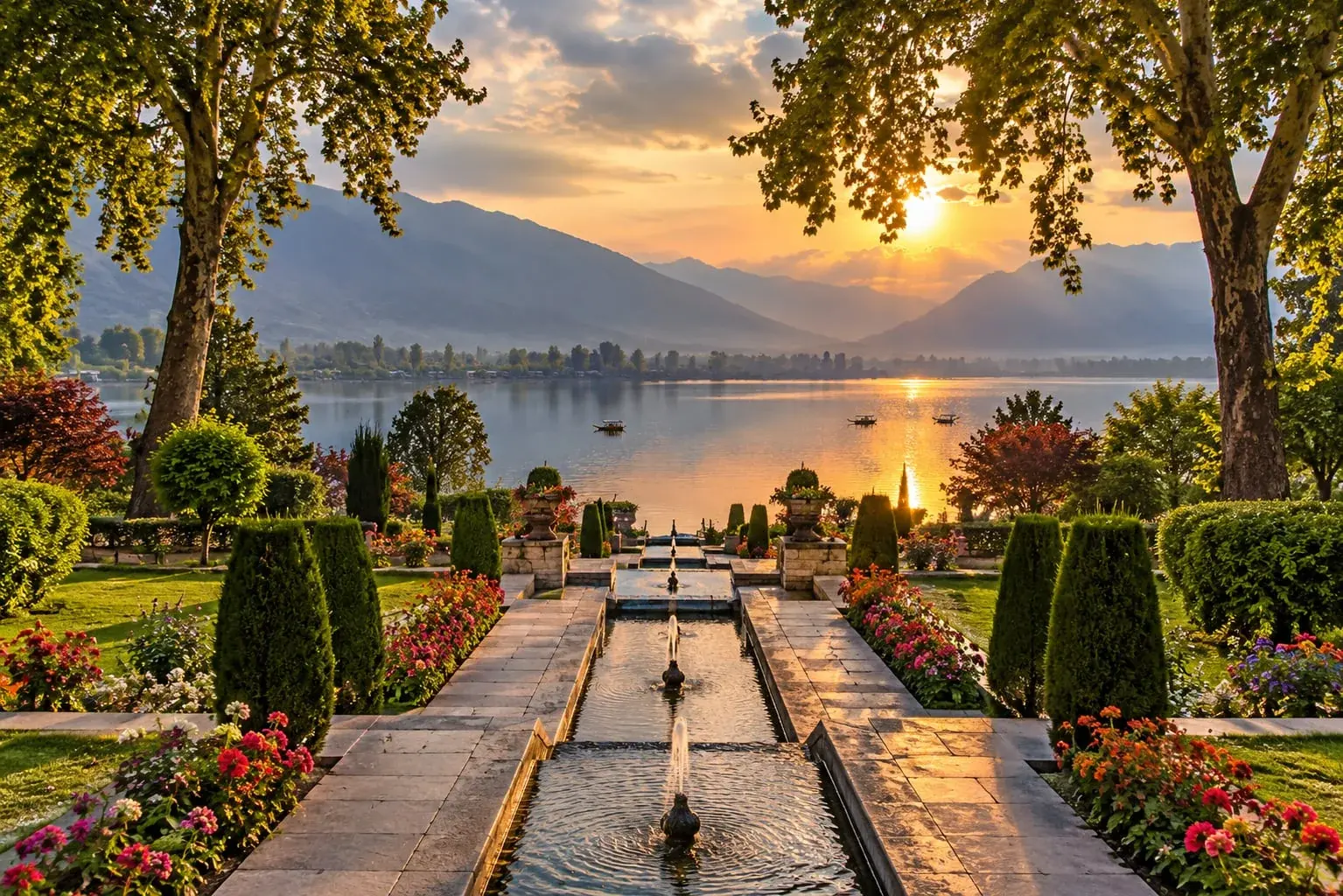
A walk through Srinagar's Mughal gardens follows the water uphill. Stand at the bottom of a main channel, then turn around as you climb. The same line of water that brings your eye towards the pavilions also points back towards Dal Lake.
What makes these gardens Mughal?
Terraces let water descend a slope in stages. A straight channel, fountain basins and pavilions make the route visible from far away. Gardens laid out on the Dal Lake side of Srinagar use the hill, the source of water and the view over the lake as part of the design. The route is easiest to understand when you stop at a terrace edge and follow the channel with your eye.
Give each garden a question. At Nishat, look for the relationship between the hill and the lake. At Shalimar, notice how the channel joins spaces with different uses. At Chashme Shahi, follow the spring downhill. At Pari Mahal, look out across the city and notice how the walls hold the hillside.
Nishat Bagh for the lake and terraces
Asif Khan built Nishat Bagh in 1633. Its central line climbs from the lakeside towards the Zabarwan hills through a series of chinar- and cypress-lined terraces. At the lower end, look along the whole axis before you start uphill. Then look back towards the lake from a higher terrace, where you can see how water and steps organise the slope.
Nishat works well as the main garden stop if you want a view of Dal Lake and time to walk. Pick a comfortable turnaround point for the group instead of assuming everyone will climb to the top. Where the party splits up, agree on an obvious meeting point near the entrance and a time to return.
Shalimar Bagh for channels and pavilions
Jahangir built Shalimar Bagh for Noor Jahan in 1619. The Shah Nahar channel runs through the main terraces and links the garden's former public, private and royal spaces. Near the public audience hall, look at how the water passes the structure and continues uphill. The changes in width, enclosure and planting tell you how the garden's use changed as visitors moved inward.
Give Shalimar time if you are interested in buildings as well as planting. Fountains and shady paths are worth a pause even if the whole group does not walk the full length. If you are photographing the axis, start with a view from the middle of the route and then see how the pavilions frame the same channel from farther uphill.
Chashme Shahi for the Royal Spring
Ali Mardan Khan built Chashme Shahi around a spring in 1632 on Shah Jahan's orders. The garden is smaller and steeper than the main lakeside gardens. Follow the water past the upper spring pavilion, ramps and lower fountain pools. The water can lead your attention through the design even if you stay on a lower terrace.
The entrances to higher sections involve steps. Check what you can reach and leave time to return to the vehicle. If the lower garden gives your group the visit it wants, it can be a useful shorter stop after a larger garden. Bring drinking water for the day.
Pari Mahal for the hillside view
Dara Shikoh built Pari Mahal on a hillside above Dal Lake. It served as a library and observatory. The arched walls and terrace edges are useful places to look at how the structure steps down the hill. Choose this stop for the view and the building, and allow a separate drive from the gardens below.
Check that the site is open and ask where a car can stop. Once inside, take the paths and steps at a pace that suits your group, especially after rain. Low cloud or haze can change the view. If the panorama is the purpose of the stop and visibility is poor, spend more time in a lower garden or keep the hilltop for another day.
How do you put the gardens into one day?
| Part of the day | A workable sequence | Why you might change it |
|---|---|---|
| Morning | Begin at Shalimar Bagh or Nishat Bagh and allow time for the main walk. | Choose one large garden if someone needs a slower pace. |
| Late morning or lunch | Continue to the other lakeside garden if the group wants another long walk, or take a break. | A lunch stop gives everyone time before the smaller hillside sites. |
| Afternoon | Pick Chashme Shahi for the spring and Pari Mahal for the view if both are open and time allows. | Choose one if stairs, daylight, weather or the drive make the second stop a stretch. |
Check which entrance your driver will use and whether there is an accessible place to meet at the end. If you are staying by Dal Lake, you can combine one garden with a short lake outing. For a second day built around streets, buildings and markets, use the Old Srinagar heritage walk. The Srinagar destination guide helps you decide how much city time to keep.
How do spring, summer and autumn change the walk?
In spring, the tulip garden is a separate visit with its own opening dates and ticket arrangements. Check the Kashmir tulip festival guide before trying to fit both into one morning. In summer, arrange a break and carry water on the terraces. In autumn, give yourself time to see the chinar avenues without moving immediately to the next entrance. In winter, confirm hours and check whether wet or icy steps affect your visit.
What should you confirm before visiting?
Check current hours, entry fees and any rules that apply to your camera or tripod. Ask about the entrance, stairs and how far you need to walk from the drop-off point. Conditions vary by garden and by the part you want to reach. If someone uses a wheelchair or avoids steps, confirm the exact route and a place to wait or sit before you buy a ticket.
Keep children within reach near water and terrace edges. Wear shoes that grip on damp paving and put a layer and water in a small bag. If you have a driver, agree which stops are included and where the pickup point is at each one. A park name by itself may not give you a precise meeting place.
Which gardens fit a shorter or slower visit?
Choose Nishat for the lake and a walk you can turn back from, or Shalimar for the main channel and former court spaces. Add Chashme Shahi if the group can manage the entrance and terrace steps. Pick Pari Mahal when the view is the priority and you can confirm access. If your first stop was enough walking, leave the extra time for a meal or a drive along Dal Lake.
Families, photographers and older travellers can use the same route at different speeds. Give the people who want to climb a later meeting time. If garden history is the main reason for the day, ask about a guided visit and choose fewer places so there is time to follow the changes in water, building and planting at each one.
Questions travellers ask
Which Mughal garden should I visit first in Srinagar?
Start at Nishat if you want a lakeside view and terraces, or at Shalimar for the main water channel and former court spaces. Keep enough time to walk at your own pace.
Can I visit the four gardens in one day?
You can plan them in one day if access, opening hours and your walking pace allow. A more relaxed plan uses one or two larger gardens and one smaller stop.
Are all the Mughal garden terraces step-free?
Entrance and terrace access vary. Ask about the gate, parking or drop-off point and the exact section you want to reach. Chashme Shahi has steps between terraces.
Is Pari Mahal open every day?
Confirm opening and access for your date before going uphill. If it is closed or visibility is poor, choose another lakeside garden or a city stop.
Is the tulip garden part of Nishat or Shalimar?
It is a separate visit. Check the tulip garden's current opening and ticket arrangements separately from the Mughal gardens.
Editorial check
Facts last verified 12 November 2026. Confirm current conditions, fares and rules before booking.
Updated
Planning your Kashmir trip?
Let our 25-year local team build it.
Tell us your dates and budget so the Srinagar team can suggest an itinerary and quote for your group.