Key facts
Last verified 12 November 2026
| Nishat Bagh | Lake-to-hillside terraces along a central water axis. |
|---|---|
| Shalimar Bagh | Long channel, chinar avenues and former royal audience spaces. |
| Chashme Shahi and Pari Mahal | A spring garden and a separate hilltop visit. Confirm access at each. |
A walk through Srinagar's Mughal gardens follows the water uphill. Stand at the bottom of a main channel, then turn around as you climb. The same line of water that brings your eye towards the pavilions also points back towards Dal Lake.
What makes these gardens Mughal?
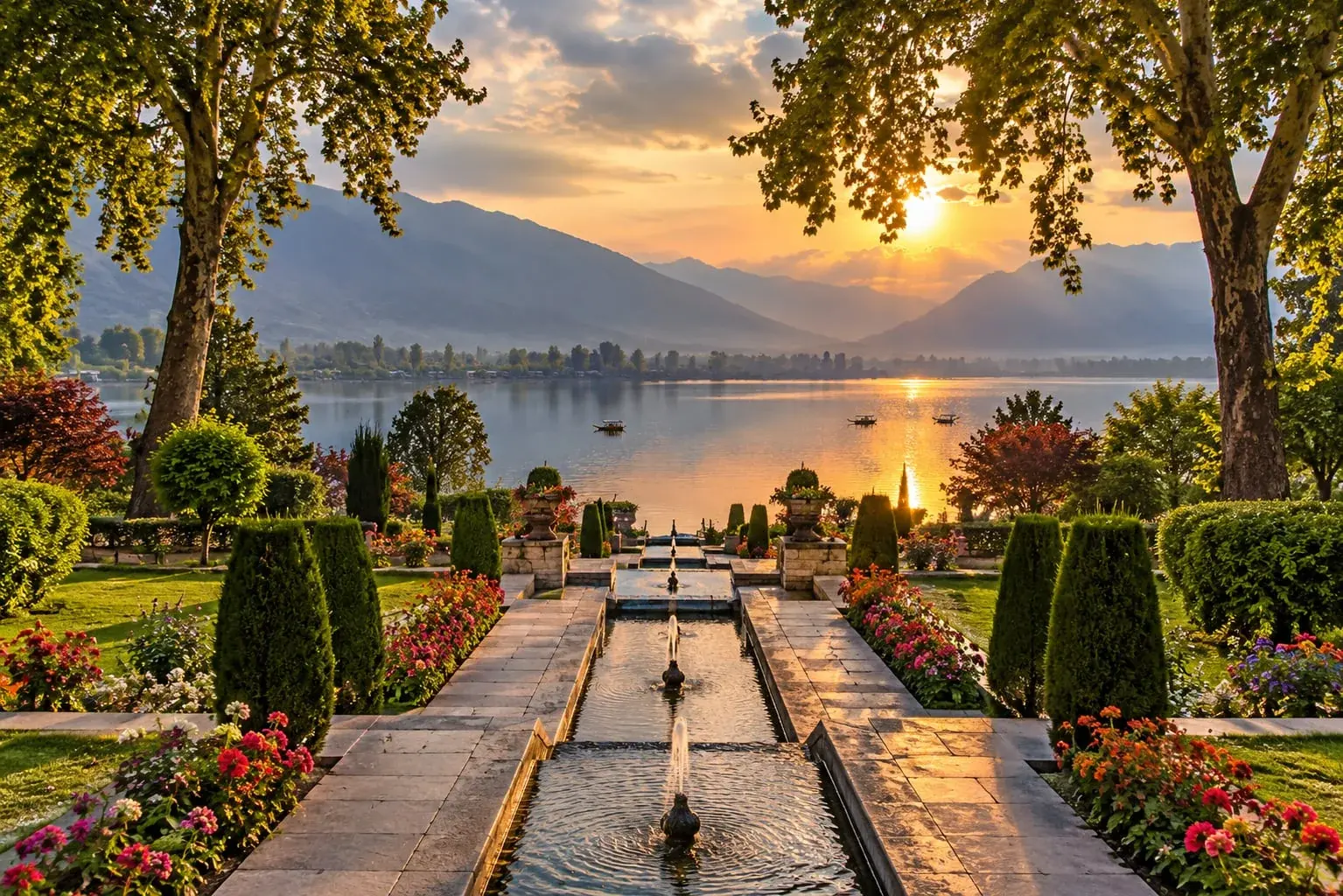
Terraces let water descend a slope in stages. A straight channel, fountain basins and pavilions make the route visible from far away. Gardens laid out on the Dal Lake side of Srinagar use the hill, the source of water and the view over the lake as part of the design. The route is easiest to understand when you stop at a terrace edge and follow the channel with your eye.
Give each garden a question. At Nishat, look for the relationship between the hill and the lake. At Shalimar, notice how the channel joins spaces with different uses. At Chashme Shahi, follow the spring downhill. At Pari Mahal, look out across the city and notice how the walls hold the hillside.
Nishat Bagh for the lake and terraces
Asif Khan built Nishat Bagh in 1633. Its central line climbs from the lakeside towards the Zabarwan hills through a series of chinar- and cypress-lined terraces. At the lower end, look along the whole axis before you start uphill. Then look back towards the lake from a higher terrace, where you can see how water and steps organise the slope.
Nishat works well as the main garden stop if you want a view of Dal Lake and time to walk. Pick a comfortable turnaround point for the group instead of assuming everyone will climb to the top. Where the party splits up, agree on an obvious meeting point near the entrance and a time to return.
Shalimar Bagh for channels and pavilions
Jahangir built Shalimar Bagh for Noor Jahan in 1619. The Shah Nahar channel runs through the main terraces and links the garden's former public, private and royal spaces. Near the public audience hall, look at how the water passes the structure and continues uphill. The changes in width, enclosure and planting tell you how the garden's use changed as visitors moved inward.
Give Shalimar time if you are interested in buildings as well as planting. Fountains and shady paths are worth a pause even if the whole group does not walk the full length. If you are photographing the axis, start with a view from the middle of the route and then see how the pavilions frame the same channel from farther uphill.
Chashme Shahi for the Royal Spring
Ali Mardan Khan built Chashme Shahi around a spring in 1632 on Shah Jahan's orders. The garden is smaller and steeper than the main lakeside gardens. Follow the water past the upper spring pavilion, ramps and lower fountain pools. The water can lead your attention through the design even if you stay on a lower terrace.
The entrances to higher sections involve steps. Check what you can reach and leave time to return to the vehicle. If the lower garden gives your group the visit it wants, it can be a useful shorter stop after a larger garden. Bring drinking water for the day.
Pari Mahal for the hillside view
Dara Shikoh built Pari Mahal on a hillside above Dal Lake. It served as a library and observatory. The arched walls and terrace edges are useful places to look at how the structure steps down the hill. Choose this stop for the view and the building, and allow a separate drive from the gardens below.
Check that the site is open and ask where a car can stop. Once inside, take the paths and steps at a pace that suits your group, especially after rain. Low cloud or haze can change the view. If the panorama is the purpose of the stop and visibility is poor, spend more time in a lower garden or keep the hilltop for another day.
How do you put the gardens into one day?
| Part of the day | A workable sequence | Why you might change it |
|---|---|---|
| Morning | Begin at Shalimar Bagh or Nishat Bagh and allow time for the main walk. | Choose one large garden if someone needs a slower pace. |
| Late morning or lunch | Continue to the other lakeside garden if the group wants another long walk, or take a break. | A lunch stop gives everyone time before the smaller hillside sites. |
| Afternoon | Pick Chashme Shahi for the spring and Pari Mahal for the view if both are open and time allows. | Choose one if stairs, daylight, weather or the drive make the second stop a stretch. |
Check which entrance your driver will use and whether there is an accessible place to meet at the end. If you are staying by Dal Lake, you can combine one garden with a short lake outing. For a second day built around streets, buildings and markets, use the Old Srinagar heritage walk. The Srinagar destination guide helps you decide how much city time to keep.
How do spring, summer and autumn change the walk?
In spring, the tulip garden is a separate visit with its own opening dates and ticket arrangements. Check the Kashmir tulip festival guide before trying to fit both into one morning. In summer, arrange a break and carry water on the terraces. In autumn, give yourself time to see the chinar avenues without moving immediately to the next entrance. In winter, confirm hours and check whether wet or icy steps affect your visit.
What should you confirm before visiting?
Check current hours, entry fees and any rules that apply to your camera or tripod. Ask about the entrance, stairs and how far you need to walk from the drop-off point. Conditions vary by garden and by the part you want to reach. If someone uses a wheelchair or avoids steps, confirm the exact route and a place to wait or sit before you buy a ticket.
Keep children within reach near water and terrace edges. Wear shoes that grip on damp paving and put a layer and water in a small bag. If you have a driver, agree which stops are included and where the pickup point is at each one. A park name by itself may not give you a precise meeting place.
Which gardens fit a shorter or slower visit?
Choose Nishat for the lake and a walk you can turn back from, or Shalimar for the main channel and former court spaces. Add Chashme Shahi if the group can manage the entrance and terrace steps. Pick Pari Mahal when the view is the priority and you can confirm access. If your first stop was enough walking, leave the extra time for a meal or a drive along Dal Lake.
Families, photographers and older travellers can use the same route at different speeds. Give the people who want to climb a later meeting time. If garden history is the main reason for the day, ask about a guided visit and choose fewer places so there is time to follow the changes in water, building and planting at each one.
Questions travellers ask
The central channel shows how water descends the slope, with terraces, basins and pavilions framing its route as you look from one level to another. Pause before walking farther to see how the channel relates to the hillside. A shorter path can still show how the main design works.
Nishat suits a walk linking Dal Lake and the hillside, while Shalimar suits visitors interested in the channel and the gardens’ former court spaces and pavilions. Select one as the main stop if the group wants time to look closely. Keep the other optional if stairs or the pickup matter.
The lower end gives you a view along the terraces toward the Zabarwan hills, with the centre line helping you see how the slope is arranged. Look back toward Dal Lake if you go higher. Choose a turnaround point that everyone can use without needing to finish the climb.
The path moves between views uphill and back toward Dal Lake, so even a short lower walk can show the relationship between the terraces, water and landscape. Ask where you can turn back comfortably. Arrange a meeting near the entrance if some guests decide to go farther.
The channel links spaces formerly used for public, private and royal activity, so look at how enclosure, planting and width change as you follow it through the garden. Pause near the public audience hall to see how water passes the building. Choose one section if your group prefers a lighter walk.
A view from the middle of the route shows the channel in relation to the pavilions, and another viewpoint farther uphill can frame the same line differently. Check what photography equipment is allowed before planning your outing around a particular shot. Allow time to wait without blocking the path.
Nishat was built by Asif Khan in 1633, while Shalimar was built by Jahangir for Noor Jahan in 1619, and the two gardens use their settings differently. Use the dates to place the visits in context. Look at the lake-to-hill axis at Nishat and the former audience spaces at Shalimar.
Chashme Shahi offers a more compact visit around a spring and its lower pools, with steeper sections that deserve a separate walking and access check. The lower garden can be enough after a long morning. Confirm where the vehicle can wait and how much time your group wants outside.
The lower fountains and the direction of the channel let visitors follow the spring’s role in the garden without having to reach the upper pavilion or steps. Check what parts are open when you arrive. Pick a place to reunite if others in your party want to climb farther.
Chashme Shahi was built around a spring by Ali Mardan Khan in 1632, and the pavilion, ramps and pools trace how the water moves downhill. Compare what you can see from the upper spring and the lower terrace before setting a route. Bring drinking water separately for the day.
Pari Mahal is a hillside structure associated with Dara Shikoh that served as a library and observatory, and its walls frame views above Dal Lake. Look at how the arches and terrace edges hold the slope. Allow a separate drive and confirm where the vehicle can drop the group.
Low cloud or haze can change what you see from Pari Mahal, so a panorama-focused visit is easier to move than a lower garden walk nearby. Check visibility, site access and walking conditions before taking the drive. Use the spare time at a lower stop if the view is poor.
Both may fit if the sites are open and the available time covers the separate drive, entrance and amount of walking your group wants at each. Choose just one if stairs, weather or daylight make the second inconvenient. Confirm the pickup at each location rather than using one general meeting point.
A lunch break makes sense if the first garden provides enough walking, especially when the group still wants a smaller spring or hillside stop in the afternoon. Compare the distance from your meal to the next entrance. Keep enough time after lunch for the actual drive and pickup.
One garden walk can use the morning and leave room for a shorter lake outing near your stay, provided the driver and landing arrangements leave enough time. Choose the garden by the walk the group wants. Agree on the shore meeting point and what happens if the garden runs longer.
The tulip garden has its own opening window and tickets, so check those separately from the Mughal garden before relying on both for one short morning. Choose which stop matters most if travel or entry takes longer. A lake or city outing can replace the tulip visit when it is closed.
Water, suitable footwear and time for a break are useful when the group plans to spend much of a summer morning walking the terraces in Srinagar. Keep a small bag easy to carry and choose a place to rest. Arrange a meeting for any traveller who calls the walk early.
A main walk at Nishat or Shalimar can leave room to pause along the chinar avenues if the group keeps the next entrance or car pickup flexible. Ask about local colour before setting a date. Use the remainder of the morning for a meal if one walk is enough.
Current hours, the open entrance and the surface on wet or icy steps should be checked before assuming an upper terrace will suit the group that day. Choose a lower section if you want a shorter visit. Keep another stop available if the path you need is unsuitable.
The useful detail is the exact route from the drop to a usable entrance, then to the part of the garden they want to see or where they can sit. Ask about steps, ramps and the return point before buying admission. Choose one site that the group knows it can use.
Families should plan where children can walk under close supervision, particularly around water channels or terrace edges, and choose a short section everyone can finish together. Wear shoes with grip when paving is damp. Agree where the group will meet if any adults take a longer path.
Current rules for cameras or tripods should be checked for the specific garden and entrance, along with fees, hours and whether the intended viewpoint is accessible that day. Choose a simpler visit if your setup is not permitted. Allow room for other people to use the same paths.
The driver needs the entrance, exact return meeting point and which stops are included, alongside a realistic time for the group to finish its chosen route inside. Check that the vehicle can stop near that exit. Give guests the meeting landmark if they decide to take different paths.
Fewer places give you time to follow how water, planting and buildings work together, particularly when history is the main reason for choosing a guided garden outing. Ask which sections the visit can cover and how far they are from the entrance. Leave room to pause at the features you came to understand.
The planner needs the gardens you most want, walking limits, desired viewpoint and where the group is staying to arrange an entrance and route at a comfortable pace. Say whether photography, history or the lake view is the priority. Ask for the pickup and any separate admission in writing.
Editorial check
Facts last verified 12 November 2026. Confirm current conditions, fares and rules before booking.
Updated